Category: Fly Fishing for Trout

  • Summertime Fly Fishing Tips

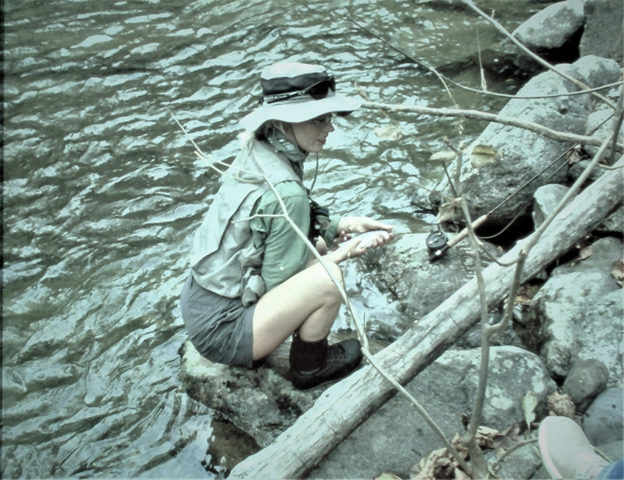
    Angie Marsh dressed right for the hot weather of summer


    By James Marsh

    We want to republish this older post on fly fishing during the summer months and warmer water.

    1.      The hot weather of summertime can demand different strategies and fly fishing techniques than other seasons of the year. The three basic types of water trout and other species of freshwater fish are found in, freestone streams, tailwaters and spring creeks, each have their own circumstances. In all three different types of water, it is the temperature of the water that is important. Different species of fish also have their own preferences. In this article I will focus on fly fishing for trout. In freestone streams, the weather and air temperature mainly control the temperature of the water. The difference usually depends on the amount of shade the stream gets as well as the elevation of it at any one point. The higher the elevation, the cooler the water usually is. In spring creeks, where water comes from below the ground, it usually comes out of the ground at an almost constant temperature year-round but from that point on, it is affected by the weather and air temperature. In general, during the summer, the farther it travels downstream from the spring it comes from, the warmer it gets.  Tailwaters, that come from the bottom of lakes or reservoir are similar to the spring creeks in that the water comes out of the dam at an almost constant temperature. If the lake is deep, it usually comes out at about 39 degrees F.
    2.      A very important item you need is a thermometer. Fish are most active when the water temperature ranging from 50 to 70 degrees F. They will get a little sluggish or lethargic when it is much above 70 F. and we don’t recommend fishing for them when the water is above 70 degrees F. You can fish early morning is those streams that get a little too warm in the afternoons. The thermometer will let you know if the water is at a good temperature or not.
    3.      In addition to aquatic insects, crustaceans and baitfish, terrestrial insects will also work during the summer. Of course, they have to get in the water for the trout to eat them. We don’t suggest placing too much emphasis on them as often there are not any in the water. During times that high water levels start dropping down, especially if the water in draining back into the stream for the surrounding ground, there can be a lot of ants and beetles getting into the water. During high wind conditions, you will often find grasshoppers are effective because they are blowing into the water. This is usually best where there are a lot of grass along the banks of the stream. The tip is to just not place too much importance on using terrestrial imitations. We have taken samples of drifting insects with professional entomology equipment for hours many times during the summer, to not find any terrestrials in the water. 
    4.      It isn’t the direct influence of the water temperature that affects the trout. Trout are cold blooded animals, and their blood is usually very close to the same temperature as the water. When it is too warm, the higher body temperature requires more oxygen to keep the fish active. Fish the highly oxygenated sections of streams when water temperatures are rather high. Riffles and runs and plunge pools are good places to fish when the water is warm. Slow moving water like water found in large pools is usually not that productive.
    5.      Anglers can get too warm just as well as the trout and this can affect one’s ability to concentrate. Wearing the right type of clothing to stay cool and staying well hydrated can improve one’s success.

    Our hottest selling product: Flies and Stream and Species Fly Selections
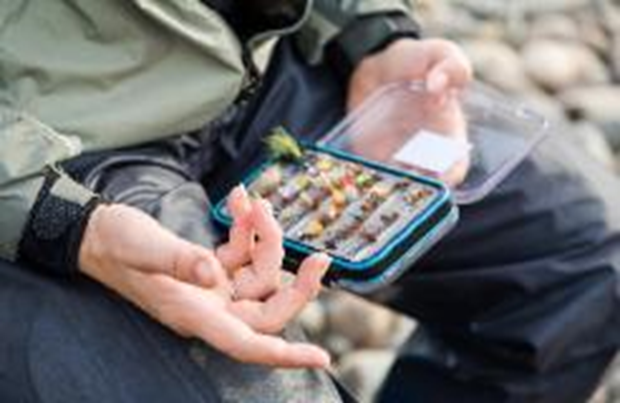
    Typical Perfect Fly Selection

         We have our own line of products for fly fishing including our own fly patterns as well as our own line of fly rods, fly reels, fly lines, leaders and tippets, vest and packs, and many other fly fishing items. That allows us to sell directly from us to you, the angler without markup in price from distributors, representatives, or other middle men. Our number one selling products are our fly selections for different streams and locations throughout the nation and/or different species of fish. The selections can cover a specific time interval, season, or complete year. The selections can match any dollar budget amount you desire or our standard good, better, or best selections. There are specific fly selections for certain species of fish such as Great Lake Steelhead, for example.

    Click Here to see the different types of fly selections. Note: there are two pages of them and be sure to note the “custom selections”.


           email: sales@perfectflystore.com  Tel. 800 – 594 – 4726
         website: www.perfectflystore.com

  • New Match the Hatch Tools and Kits

    The Match the Hatch kit and individual tools are for those of you that want to learn to catch more fish by matching what’s the most plentiful and available trout foods. The Streamside Match-The-Hatch, match nymphs and larvae that hasn’t hatched yet and those insects that have hatched and died on the water Kit. Packed in a rip-stop nylon belt pouch, each Match-The-Hatch Kit includes:

    One Sci-Fly Seine
    One Fly Fishing Thermometer
    One complete Invertebrate Vial Kit
    One Invertebrate Magnifier Kit
    One pair of Collection Tweezers
    One River Oracle decal
    One Rip-stop Nylon belt pouch that attaches to any standard wading belt or fly-pack strap

    Once equipped with this kit, every angler will be able to quickly and easily match the most plentiful and available foods with confidence and will be spending more time catching and less time guessing!

    You can also purchase the individual parts of the kits.

  • Fly Casting – Part Three – Tips

    Before we get into casting, remember that although casting is an important function in fly-fishing, there are a lot of other things that are just as important ifnot more important than making a perfect cast. Reading water, finding fish,knowing the habits of the fish you are after, knowing where to cast, and many other things can be far more important than making a perfect cast. So, don’t be upset if you don’t make every cast to perfection. The number of fish you catch is usually not directly proportional to your casting ability, and as I have said several times, how “far” you can cast.If you are just getting started or if you are having problems with your cast,consider these points.Focus on accuracy, then distance. The father you cast, the more difficult it becomes to be accurate. Most of the time, accuracy is far more important than distance.Keep in mind that if you learn something the wrong way, it may take longer to learn to correct it than if you started from scratch. If you have never cast a fly or any type of fishing rod for that matter, you are in a good position to learn.Practice makes perfect but not if you are using the wrong technique.One thing you don’t need is someone who thinks they know how to cast, and really doesn’t know how, trying to teach you.  If you want another person  involved, select a person who knows nothing about fly casting. They can tell you if you are stopping the rod in the right position or letting it to back too far just as well as an experienced fly caster, without the added instructions he or she may throw in.If you can practice on a lake or pond, by all means do so. The water helps to load the rod on your back cast. Picking line up off of grass to make your back cast doesn’t load the rod the same way as water.  Avoid concrete or asphalt paving as it may damage your fly line.

  • Fly Casting – Part Two – Long Cast Aren’t Necessary

    Let me get to a main point you shouldn’t ever forget. Anytime and anywhere, anyone is trying to cast for trout by making a cast of over forty or fifty feet long, unless they have special circumstances that are not normal, they are using the wrong approach. Most all of the cast you make for trout should be less than thirty, feet long anywhere you are fishing. In fact, if you make cast over fifty, feet long fishing for saltwater species, you are making a mistake in most any situation you could possibly conceive.There are several reasons for this. One is very simple. The longer you cast, the less accurate you are. You cannot possible make a fifty-foot cast and land a fly  on a ten foot long leader and tippet combination within six inches of your  intended target without you false cast too many times. That brings up another subject of potential error- false casting – but I will discuss that later.Scenes from “A River Runs Through It” or from your favorite twenty-year old casting video looks great and tend to make you think you can’t cast, but the truth of the matter is, they have nothing to do with catching trout. Short, accurate cast that allow you to make a drag-free drift (meaning crooked, messed up cast)is what catches trout.There’s another factor that causes anglers to attempt to make the mistake of trying to cast too far. It’s caused by the fly rod manufacturers. For the last several years, up until fairly recently, far too much emphasis has been placed on making long cast. Most every fly rod ad had to do with fast action, fast tip,long casting fly rods. It always amazed me that the same manufacturers who promoted the high price, long casting fly rods, also sold an even more expensive model made of bamboo with an action so slow it was difficult to stay awake when waiting on the back cast to straighten out. I suppose anglers were supposed to be stupid enough to think that making a fast action fly rod cost a lot more than making a medium or slow action fly rod.I think the increase in saltwater fishing may have been a factor in this. Thosewho were new to fishing in saltwater were easily convinced that long cast were essential. When it came to freshwater, as with most anything else,manufacturers had to come up with a reason for you to replace your old fly rod with a new one. Recently the emphasis has been headed back to medium to slow action fly rods. In ninety-percent of the fly fishing for trout situations, a slow to medium action fly rod will outperform a fast action rod.The most recent emphasis in selling fly rods has gone back to weight. In fact,some manufacturers have gone so far in their attempts to reduce the weight that they have reduced the size of the handle to the point it only fits the hands of a petite female teenager. Anglers with big hands like me have been left out.In case you missed it, here is my point. If you are trying to make fifteen to twenty- foot curve cast that lands your fly withing a six-inch radius of a target using a fast-action fly rod, you are making it much more difficult than it should be. If you are not concentrating on doing something at least similar to this, then you need to at least recognize that you should be. That’s the type of cast you need to make to catch trout in most trout streams in the nation.

  • Fly Fishing For Sea Run Cutthroat Trout

    First of all, Sea Run Cutthroats aren’t found in every steelhead and salmon stream that flows from the Pacific Ocean into freshwater streams. They can only be found in certain streams. Those streams that do have runs of cutthroats are designated in the various articles of the stream section of this site.The Sea Run Cutthroat trout will generally come into the river after the first major salmon run. They can remain in the tidal waters for a few days,  coming in and going out with the tides. As soon as they enter the rivers, they must revert to feeding on aquatic insects. The saltwater baitfish they are used to eating don’t exist in the freshwater. They slowly change their eating habits  back to the insects they were raised on. In some streams, they feed almost exclusively on aquatic insects; however, in most cases, they will also feed on small minnows and baitfish.Since the Sea Run Cutts follow the salmon, fly fishing after a rain increases your chances of finding the fish. Salmon prefer the higher water, especially when the streams are low in the Fall season.If the water is very clear, dark, cloudy days are always best. It doesn’t seem to mater that much if the water is stained, but it does if it’s very clear. The low light conditions give the cutthroat trout a much better chance of hiding and attacking the baitfish. They don’t tend to follow or chase bait in open water. If the water is clear, you want to fish the shallower water under low light conditions. If it’s a bright clear day, fish the edges of the channels, pockets and deeper areas of water.Up and across presentations of the fly usually work best. You can get much closer to the cutthroat fishing in an upstream direction and make more accurate presentations than you can make fishing blinding in large areas of the stream. Down and across presentations, and swinging the fly works occasionally, but usually not as good as the up and across direction. Many anglers will disagree with this but that’s what we have found to be most productive.Most of the time a weight-forward, floating fly line is best. If you are fishing slow moving, slick water, fish near cover and structure in the water. The banks are usually better than mid-stream structure but again, that can vary with the particular stream your fishing.  Small, Spey flies will also work when your fishing the larger, open water streams. Sometimes the Sea Run Cutthroats can be found in the same water you would find steelhead.Remember, the sea run cutthroats don’t stay in anyone area for a long period of time. They move around in the stream changing their locations. You should do the same thing until you find them. Fishing the same section of a stream, waiting on the trout to come to you is a poor strategy. Keep fishing different areas of the stream until you find the fish.The sea run cutthroats move around in schools. Using a boat is usually more productive than moving around to different wading areas but both methods work, and depend largely on the particular stream your fishing. Larger, bigger waters often require boats  due to limited wading areas.The Sea Run Cutthroat spend time in the freshwater from the time they are born until they depart for the sea.  Once they are back in the freshwater for a while, they revert back to their eating habits they relied on before. They will eat small minnows and baitfish but in most cases, the revert back to eating mayfly and stonefly nymphs and caddisfly and midge larvae.  The will also take imitations of terrestrials such as hoppers, ants and beetles.

  • Fly Fishing For Trout – Fishing Low Clear Water

    During the late Summer and early Fall, many freestone trout streams become
    very low due to the lack of rainfall. In these cases, it the air temperatures become
    very hot, trout streams can get in bad condition and fishing can become very
    tough and stressful on the trout when you are successful.

    As always, the streams to be affected the most in terms of water level are the
    small, headwater streams. There’s little water left in them in severe cases.
    Although i have no real scientific justification for saying this, I do believe the
    eastern native brook trout are more capable of surviving these tough
    environmental conditions than the other non-native species of trout. They hide
    from their predators and manage to survive even when the water is extremely low.

    If the water temperature is not too warm and catching trout isn’t going to place
    too much stress on the trout, you can be sneaky and make good presentations
    you can still catch plenty of fish. Everyone is probably aware that you should stay
    low, dress correctly and stay hidden from the trout. Those things are basic for
    fishing small streams, especially under low water conditions. What prompted this
    writing is a factor that I think many anglers overlook.

    If you move extremely slow, the trout are far less likely to notice you. Before I get
    to the point, you may want to review our articles on how trout see. Trout can see
    almost all the way around themselves. There’s only a small area directly behind
    them, called the blind spot, that is not within their peripheral vision. I have found
    that as long as you move extremely slow, they won’t notice you in their peripheral
    vision area of coverage nearly as quickly as they will when you move at a normal
    pace. By that I mean not only move you body very slowly, but refrain from the
    making the movements necessary to cast.

    The trout’s vision is not very different from bass. Both species can see almost all
    the way around themselves. For several years, I had the opportunity to
    experiment with bass in my close friend’s aquarium or Tom Mann’s Fish World in
    Eufaula, Alabama. Tom allowed me to go up to the top of the aquarium and
    experiment with fishing for the huge bass in the large tank.

    The tank is about the size of a small house and looks much like a large swimming
    pool from up top. Below, windows allow visitors to look into the aquarium from an
    underwater perspective. If you approached the water from up top where visitors
    are not allowed, every fish in the aquarium would shoot for the nearest cover.
    They had become used to the people down below looking through the windows
    and had learned they didn’t pose any danger. That was not the case up top.

    Trying to cope with the fish spooking every time I attempted to cast to them, I  
    used every method I could think of each time I tried to approach them without
    their knowing it. I discovered that if I moved like a snail, they didn’t notice me. If I
    moved any faster than that, they did. Even though my clothes didn’t blend in with
    the color of the walls behind me, they still didn’t notice me as long as my
    movements were very, very slow.

    When I learned to cast with an underhanded cast or flip of the rod, they would all
    try to eat the lure, that is until one got it. You could fish with the same lure for the
    rest of the day and they would only hide from it but that is another subject.

    I discovered that by using this same procedure, I could approach trout in
    extremely clear spring creeks in Pennsylvania without spooking them, but doing
    so is not easy. Moving at a slow, slow pace is not easy to do. It seems you will
    never get into a position to cast and then when you do, you must do so with the
    flip of a wrist, side-armed and very low. That means you can’t cast very far and
    that means you have to get very close to them. I have caught brown trout as
    close as fifteen feet from me in shallow, extremely clear water, when I was
    standing my full height which is six feet, two inches.

    Most of the time I make the mistake of moving too fast. I am not very patient any
    way and fishing at the pace of a snail isn’t easy for me to do. What I am
    describing is not a cure all for catching fish in low, clear water by any means.
    Casting to a trout may take twenty minutes of ultra slow-motion movement before
    you attempt the first and only cast you will get. I usually stoop down to my knees
    in slow motion when I do get close to the fish and then cast side-armed with as
    little body movement as possible.

    Please note that I’m not contending that this is the way to fish normal, low water
    conditions. I don’t think that extent of extreme caution is necessary in most
    cases.  I do wish to stress the point that trout do not notice your presence by
    identifying or determining that you are some type of creature from out of space
    that is going to harm them. Without turning and placing you in their very narrow
    binocular area of vision, they cannot see you well enough to determine anything
    other than something is in their area that doesn’t belong there.

    If you were in the woods observing the forest and one of the trees suddenly
    moved a couple of feet, you would spook. If a tree started moving towards you at
    a rather fast pace, you would really freak out. When a portion of the trout’s
    surroundings suddenly moves, it will freak out. Slow your movements way down
    and you will catch more trout under low water conditions.

    Copyright James Marsh 2013

  • Fly Fishing For Trout – Finding Trout In Freestone Streams

    When you’re fishing a freestone stream, you most likely try to place your fly in
    every likely pocket, current seam or any other place a trout could be holding.
    Even the clearest lie can conceal a trout. If you place your fly in the right spot, a
    trout may take it, that is, if a trout is there. If trout are not there then you
    certainly want get a rise. If a trout is there, then you may or may not get a rise
    depending on many factors some of which are in your control and some of which
    are not in your control.  If you don’t get a rise, you either try again or you move
    on the next likely holding spot.

    In many cases, anglers prefer to locate trout by spotting the fish or their rises,
    but in small, headwater, freestone streams you are usually not usually able to
    spot them. Never-the-less, most successful anglers try to envision a trout in each
    and every likely spot. In other words, they consider that if a trout did exist in that
    lie, exactly where it would be positioned and exactly where it would be feeding.

    Of course, you also must first take into consideration the type of food the trout
    may be eating, not necessarily what species of trout food, more particularly if the
    trout may be feeding on food that is drifting on the bottom, somewhere beneath
    the surface or floating on the surface of the water.

    If you do spot a trout, then you want to plan a way to approach it, select a fly to
    best imitate whatever it is you think it may be taking and then make your
    presentation. You know the fish is there. It’s up to you to catch it.

    When you are fishing fast pocket water, moving from one pocket, current seam
    or likely holding spot to another, you don’t ever know if a fish was there or not,
    unless you spook them. This is the nature of fishing freestone streams. It’s
    completely different from fishing spring creeks, for example, where you are able
    to determine if a fish is in a certain place or not. Instead of finding a feeding fish
    and approaching it to try to catch it, you fish in place you “think” a fish may be
    holding.

    Most of the time, there’s not enough of any one insect or other food for the trout
    to be feeding on selectively. In other words, there are no hatches taking place.
    Since there’s a lot of water that could cover up a trout, there are a lot of places
    you could place your fly to try to get a fish to take it. If you cover them all, you
    will be spending a lot of time casting to places where there simply are no fish. If
    you only present your fly in places where fish are most likely holding, then you
    are going to increase your odds tremendously.

    Assuming you make good presentations, use the right fly and don’t spook the
    trout, presenting your fly in the most likely holding lies is the only way you can
    increase your odds of catching trout in small, fast water freestone streams. If you
    were fishing competitively, against others and thank goodness you this isn’t the
    case in most trout streams, you would go a step farther. You would only present
    your fly in the most likely holding lies or the choice places. In other words, you
    would make your first cast count, and make only one or two more cast and
    then you would move on.

    In the competitive bass fishing world they call this the hit and run approach.
    Instead of fishing a hundred yards of the stream in an hour you would fish it in
    ten minutes only casting to the most likely holding spots.

    Am I recommending this method of fishing? No, I’m not. Trout fishing would
    become work and less fun. I am strictly trying to point out the way you increase
    your odds of catching fish in small, fast water freestone streams. You only place
    your fly in the likely holding and feeding lies.

    Copyright James Marsh 2013

  • Fly Fishing For Trout – Changing Water Conditions

    The stream’s volume of water and rate of flow strictly depends upon Mother
    Nature. The amount of water in the stream can vary drastically with the seasons
    of the year. Heavy rainfall that usually occurs in the spring months makes the
    freestone streams large and turbulent and sometimes flood beyond their normal
    banks. In the late summer and fall months of the year, most freestone streams
    reach their lowest levels. Sometimes the flow can become so slow and the
    dissolved oxygen levels so low that it become tough for trout to survive. This is
    especially true in the lower sections of the streams in the foothills.

    At the headwaters, most eastern freestone mountain streams support native
    brook trout. These fish are usually small, averaging from four to eight inches
    because they have less space to live and less food to eat but they are also
    usually very aggressive and lighting fast. Most of the time, trout found in the
    acidic, headwater streams feed opportunistically. It is rare that they have enough
    of any one species of food to feed on. Selective feeding times are few and far
    between.

    The angler usually does not have to be concerned with specific patterns of flies.
    Most of the time, attractor or non-specific type flies that imitate a variety of  
    insects will work fine. There are a few times when the trout do concentrate on a
    particular insect. There is usually a few species that can cause selective feeding
    for short periods of time in the headwater streams.

    As many of you may know, in the Eastern Appalachian Mountains, rainbow and
    brown trout are a problem for the native brook trout. They will compete for the
    same space and food. This has forced the smaller brook trout to exist only at
    higher and more remote locations than they once did. In many cases, in the
    middle and lower elevations of the streams in the Great Smoky Mountains
    National Park, brook trout have been completely eliminated by the rainbow and
    brown trout. The park service along with concerned anglers are working on
    changing this in a few streams.

    It doesn’t take much to upset the balance of nature in a freestone stream. Many,
    many factors have done just that. The logging of timber has been a major  
    problem for many streams. The construction of roads has also affected many of
    the streams and in many different ways. The construction of lakes has
    also affected many trout streams. This is a big issue with many western trout
    streams. Acid rain is yet another adverse factor that has affected streams in the
    Eastern United States. The list goes on and on.

    For our purposes here, the main thing to be gained from these adverse affects
    is that anglers should be aware of what makes a freestone stream produce good
    trout fishing and what hurts them. Two important points to stop and register is
    water temperature (which also affects the oxygen content) and water levels or
    stream flows. Knowing these two things about a freestone stream is the first and
    primarily the most important things to know.

    By far the best source of information is the angler’s thermometer. It will provide
    water temperatures that are accurate at the time you are fishing at the particular
    point you are fishing.  

    Stream flows can be obtained from this site under the Information Section for any
    stream in the nation. Thunderstorms that occur in a different watershed can
    change the flows very quickly.

    The next most important thing would probably be the clarity of the stream’s water.
    The stream levels and flow rates are good indicators of the water clarity but this
    information alone is sometimes deceptive. Of course, once you are on the
    stream, you can see the watercolor conditions for yourself.

    The pH of the water is yet another factor that affects the trout and its food but it
    is one you can do little about. You can change the way you fish to adjust to water
    temperature and water levels but you can’t adjust for high pH levels. Of course,
    just knowing the water temperature and level is not enough. The information is
    worthless if you do not know how it affects the trout and how it affects your fishing

    Copyright James Marsh 2013

  • Fly Fishing For Trout – Freestone Stream Insects

    When the rain and snow falls from the sky it is pure and free from minerals and
    is slightly acidic. It usually has a pH of approximately six. This can be affected by
    acid rain. The intent here is to show that the pH changes from the headwaters to
    the slower moving water in the foothills and how this affects the aquatic insect life.

    As the water flows downhill, the pH will usually increase depending upon the  
    rocks, sand, gravel, and organic material (such as leaves and vegetation) the
    water passes through. The pH of the headwater streams varies from region to
    region depending on the composition of the soil and rocks.

    Rain forest type terrain, such as is found in the Appalachian Mountains provides
    the water a different chemical composition than the more barren slopes of the
    Rocky Mountains, for example. If water passes through volcanic rock, it is going
    to remain acidic much longer than water passing through a forest. The pH of the
    water in the forest changes from the headwaters to the foothills.

    The different pH values of the water from its origin in the mountains to the larger
    streams or river in the valleys supports different groups of aquatic insects. The
    water temperature is generally higher in the lower sections of the stream and this
    can also be a factor that affects trout in that it changes the insect population.

    The speed of the water is also a big factor in determining which aquatic insects
    exist. Insects found in the fast flowing pocket water of the headwaters may be
    quite different from those found in the slower moving water found at the lower
    elevations.

    Because the water is usually fast moving pocket water, mayflies found in the
    headwaters are usually clingers. Caddisflies are not very plentiful in these waters
    because of the acidic level of the water and consequent low algae levels.

    Many species of stoneflies are in their prime habitat in the highly oxygenated
    water. This water, which is usually slightly acidic, will not support plant life such
    as algae. The aquatic insects must rely on other source of food.

    When the stream becomes the “run, pool, riffle” type of stream, normally found in
    the foothills, the more diverse type of water will usually support other many other
    species of mayflies, caddisflies and stoneflies. Mayflies may include several
    species of crawlers and swimmers. The caddisfly population and diversity will
    increase and include many species of scrapers, predators, and shedders due to
    the diverse type of habitat. Stoneflies are still usually present in the fast water.

    Since the water has poured through rocks, gravel, sand and other types of soil
    and since organic material such as leaves may have accumulated in the stream,
    the water is less acidic than it is in the headwaters. It will normally support specie
    of aquatic insects that rely on organic material that has become more prevalent
    due to the higher pH. Its increased temperature is also conductive to supporting
    other insects.

    After the stream reaches the valleys it slows down and congregates in larger
    pools with riffles. Since the water temperature is much warmer than the water at
    higher elevations and since the pH has become even more alkaline, plant growth
    may be present. The stream’s substrate usually consists of more soil and less
    rocks and burrowing mayflies may exist. The caddisfly population may increase
    since there is a lot more organic material available for the larvae. Shedders,
    predators and scraper species may be prevalent. Stoneflies my not exist in the
    less oxygenated warmer water.

    Copyright James Marsh 2013

  • Fly Fishing For Trout – Freestone Streams

    A freestone stream is born at the top of a mountain as drops of rainwater and
    melting snowflakes. As gravity forces these droplets to seep through the
    crevices of rocks, soil and organic matter, they combine into small trickles of
    water. These trickles eventually collide and become larger and larger. They form
    tiny streams that you can step across.

    The tiny streams eventually join other tiny steams to form larger ones. These tiny
    streams are made larger along the way by many other trickles of water and
    eventually become streams that are large enough to be named and shown on
    maps. These streams are usually the headwaters of what will become a large
    freestone stream or river.

    Generally, water in the headwater streams is fast moving pocket water. Most
    headwaters fall through steep gradients and rapidly flow downhill. As the stream
    reaches the lower elevations of the foothills the gradients become less and less
    and the flow of the water decreases accordingly. As more and more water
    collects the streams become wider. The water in the larger streams slows as it
    moves through the valley.

    As the stream reaches the lower elevations of the valley and the flows decrease,
    the temperature increases. Eventually the water will become too warm to support
    trout and other warm water species of fish such as smallmouth bass will become
    more prevalent. The slower moving water will not hold as much dissolved oxygen
    as the faster moving headwaters. This also becomes an important factor in the
    stream’s ability to support trout.

    Copyright James Marsh 2003