Category: Perfect Fly Journal

  • November, 2021 Perfect Fly Journal

    Perfect Fly November Fly Fishing Journal

    Contents:

    1. Late Autumn/Early Winter Season Tips
    2. Articulated Streamers
    3. Fishing Spring Creeks
    4. Winter Steelhead Fishing
    5. Pre-rigged Trout Flies
    6. Holiday Gifts Guide
    7. Fly Fishing for Speckled Trout

    Late Autumn/Early Winter Season Tips

    By James Marsh

         When the first cool mornings of Fall come around, anglers come out from their airconditioned hangouts to pursue their favorite fish on the fly – the trout. Light jackets may be needed in the early mornings, but shirt sleeves are the normal attire during most of the day. Gone are the annoying biting bugs of summer. New species of aquatic insects begin to emerge from the water due to just the opposite change in water temperature from the spring season. As the water cools, it brings about new hatches of fall caddis, mayflies midge and stonefly species of insects. Terrestrial insects will still be around until the first hard freeze.

         The first hints of the late Fall season take place in the high elevations of the Rocky Mountains as early as mid-September and by the end of October, temperatures below freezing become normal. At the same time, air temperatures in the Southwestern states like Arizona remain hot during the day but begin to cool down at night. The same changes can take place on the East coast in the state of Maine as well as other upper New England states. At the same time, trout fishing in Great Smoky Mountain National Park goes into high gear with mild, late Fall temperatures. Early season snow falls may begin in the upper Rocky Mountains as early as late September but may not occur in the Southwestern states until late

    December or January. The same variations can occur in the eastern Appalachian Mountains from Maine to Georgia.
    L

         As the water temperature falls, brown trout will begin to venture out from their summertime hiding places in search for the perfect place for their redds. Rainbows, brookies and cutthroat trout will perk up with the cooler water temperatures and continue to feed from the bottom to the surface of the water as long as the water temperature remain above about forty degrees or higher.

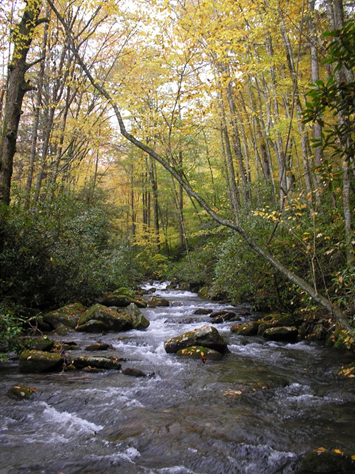
         The green colors of summer change to beautiful shades of yellows, oranges, reds and browns. When that happens, it won’t be long before the trees and bushes lose their leaves. When that happens, many anglers fishing dry flies get frustrated when their fly keeps hanging up on the leaves. It can be frustrating but fishing dry flies on the surface with leaves can also be very effective as long as the water temperature is still in the middle to upper forties or higher. Midges and Blue-winged olives among other aquatic insect hatches. Trout quickly get used to seeing the leaves and can still pick out the emerging insects easily. The leaves can serve to distort the trout’s vision of you, your gear and leader. You just need to take advantage of the leaves as cover and target open areas to place your fly.

         Cold nights and warm days are typical of late fall and early winter, again all depending on the geographical location of the stream as well as the type of stream. Most of the time, hatches will occur at the warmest part of the day. Like the spring month, cold fronts seem to pass every few days with some days being very cold and others nice and warm. The fish usually become more action on low pressure systems with cloud cover than high pressure systems with clear skies. Just because there’s some snow showers in the forecast doesn’t necessarily mean there isn’t going to be anything hatching. It isn’t uncommon to see baetis Blue-winged olive hatches when it is snowing lightly. Generally, as long as the water temperature is in the mid to upper forties, you can expect some hatches to take place. Except for midges, hatches rarely occur in water temperatures less than the mid-forties. That doesn’t mean you can’t catch trout. It simply means most of the feeding activity will be below the surface. Having a thermometer with you and taking the water temperature at various time of the day and different types of water can be of great assistance provided you know how trout react to the changing water temperatures.

         Remember, trout want position themselves in fast water very long when the water temperature is very low. It becomes a matter of them expending more energy to swim in the fast current than they can replace with food. In colder water temperatures, trout tend to hold in slower moving water. Keep in mind there is often slow-moving water in holes in the stream bottom beneath fast moving water.

         During the late fall and early winger months, spring creeks and tailwaters offer the most stable water conditions for trout. Freestone streams, especially those in warmer climates of can also provide excellent fishing conditions but the conditions do vary much more than they do in spring creeks and tailwaters. In spring creeks, water comes from underground and is usually range from about 50 to 56 degrees. In tailwaters, especially those with discharges from deep water lakes, the water temperature remains almost constant, usually from 40 to 50 degrees. In freestone streams, the water temperature is strictly controlled by mother nature. It can vary drastically, even overnight, so keeping a close water on the weather becomes very important.

         Another big variable is the type of water you fish during the late fall and early winter months. By that I don’t mean just shallow or deep water. I also mean fast- or slow-moving water or whether you are fishing riffles, runs, pools, flats, etc.  However, selecting and fishing the better type of water is also varied largely by water temperature. In general, when water is cold, you should fish slower moving to still water. When the water is warm, say around fifty degrees, you can fish faster moving water.

    2. Why Articulated Streamers

         By James Marsh
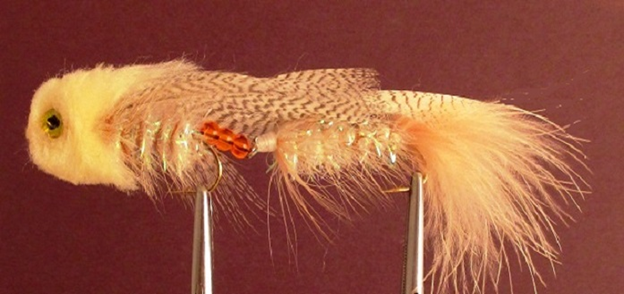
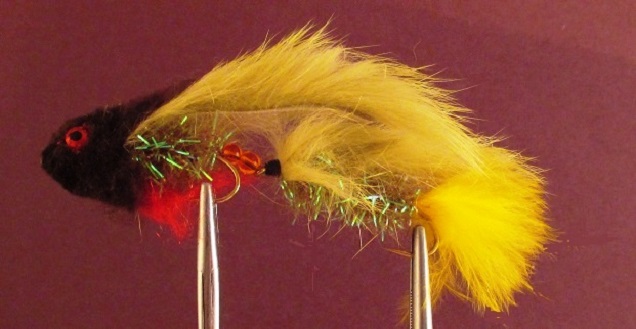
    Perfect Fly Albino Articulated Sculpin

    Click Here to see or purchase any of our Perfect Fly articulated streamer patterns. 

         The word articulated means having two or more sections connected by a flexible joint. Most fish, including baitfish, propels themselves forward by moving the tail back and forth. Certainly, a fly that is designed to imitate a baitfish should have a similar action and that is the big benefit of an articulated streamer.

         Our patterns are designed to move easily and freely with current and/or rod tip action. We use hollow plastic beads at the joints to help enable the movement. The flies come in single or double hook versions. Some fish regulations prohibit the use of double hook flies and some don’t. They also come with rattles as an option. Small, glass beads in a tube designed to be used with flies accomplish this by providing sounds that attracts fish. 

         Articulated streamers are fished the same way regular streamers are fished. The best places to present streamers are areas where fish have some protection and where they can hide and ambush food. They can also be effect in current seams and pockets of water; however, they are usually most effective when presented around cover or during times when the water is off color. They are effective in seams of current.

         Casting methods for articulated streamers vary depending on the weight of your fly. Articulated streamer flies are usually heavier than other types of flies. You should always select a target prior to making the cast. Cast upstream and across. The fly needs time to sink to the right depth. Try to finish the cast with the rod tip up high. You need to get your fly down to their level. Once your fly hits the water, let it sit for a few seconds. At this point, is usually helps to throw a downstream mend in your fly line. Allow the current to assist by pulling the fly down near the bank. This is especially useful if the bank is deep or undercut. When thefly heads downstream, tilt your rod tip down to as low as it can get and even allow the tip of it to enter the water if needed. You want to keep it there while you strip in line. This allows the streamer to stay deeper during the retrieve. Small two-to-four-inch strips will usually work well. Continue stripping in line until the fly is about to approach the end of its drift. Don’t work the fly back upstream against the current. Let it swing across the stream a few feet. Strikes often come at the end of the drift.
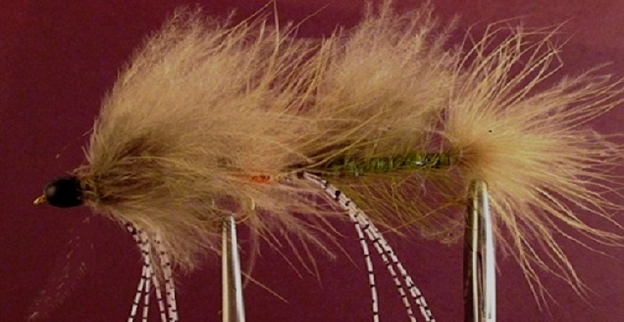
    Perfect Fly Gray Leech Articulated streamer

    Click Here to see and/or purchase any of our Perfect Fly articulated streamer patterns. 

    3. Fishing Spring Creeks

         By James Marsh
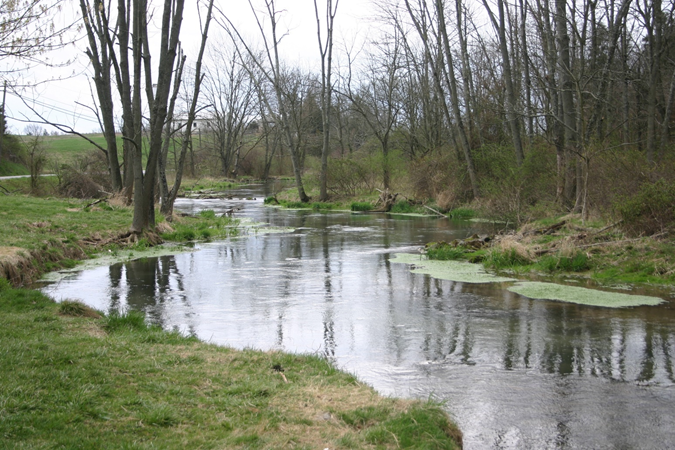
    Small Pennsylvania Spring Creek

         Tired of hearing the water is too cold or too warm, or too high and fast or that runoff is still underway?  Maybe you are tired of hearing there isn’t anything hatching. Spring creeks have clear and consistent water flow, and the aquatic environment stays relatively consistent. That all sounds good and sweet but trout in spring creeks become used to things being stable and they adjust their behavior to adapt to it. Generally, spring creeks have more food for the trout than either tailwaters or freestone streams. Trout feed more consistently and regularly as opposed to a fast water trout stream where trout can feed more opportunistically. Trout in most spring creeks are very selective. Since the water is usually smooth and clear, the trout usually get a much better look at your fly and are not as easily fooled with the artificial imitation as trout in fast, more turbulent water that only get a quick glimpse of the fly. The two different types of water, meaning fast and turbulent versus slow and smooth, presents another problem to anglers. In spring creeks, the trout can usually see you, your fly rod, line and leader much better as well as your fly.

         A spring creek is a stream formed by water “springing” from underground to the surface.  They eventually get some of their water from surface runoff from rain and snow but the majority comes from beneath the surface. Most of the spring creeks in the eastern U. S. comes from a formation of limestone that runs along the Appalachian Mountain range. This water has a high or alkaline PH which supports a lot of food for trout.

         Irrespective of the type of spring creek, they all have a steady flow of water that usually remains consistent year-round. Contrary, freestone streams are subject not only to runoff but heavy rain as well as drought conditions. The flows and the clarity of the water can change drastically overnight. Tailwater flows are also usually inconsistent due to electrical power demands or flood control measures. When you regularly fish freestone streams or tailwaters, you constantly have to change methods or presentations to adapt to the changes in water conditions. When you are fishing spring creeks, you basically face the same challenges in water conditions day to day.

         Many of the spring creeks in the western states come from basalt which is porous rock that was left from volcanic eruptions. Several of these exist in Yellowstone National Park such as the Firehole River. Others in the western states come from rivers that flow beneath the surface of the earth and re-emerge from beneath the surface as spring creeks. 

         Just about all spring creeks have soft bottoms that usually consist of soil, mud or fine gravel mixed with soft soil. Aquatic plants usually grow prolific. They range in water temperature from about 50 to 56 degrees year-round. Of course, the stream begins to warm up some in the heat of summer when it gets a good distance from the source of water or in winter, can get colder a good distance from its source. In all cases, much of the stream can be fished year-round. In some cases, more smaller streams exist along the stream a good distance from the main source which helps keep the water at a more constant temperature throughout its length.
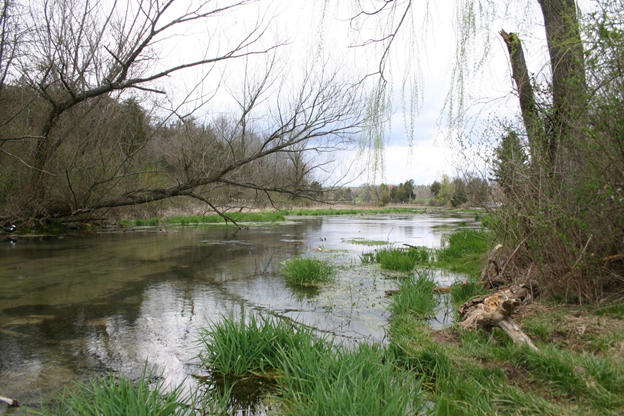
         Typically, you should use lighter tackle than you normally would in other types of water where trout exist. This isn’t necessarily because the fish may be smaller but because the fish can see everything much clearer than they normally can in a freestone stream or tailwater with fast flowing and more turbulent water flows such as runs and riffles. Often, more precise presentations and better drag free drifts are required than they are in other types of water. It certainly helps to improve your odds of success if you use flies that closely resemble the naturals. That is why our Perfect Flies are so popular in Spring Creeks. We have high volumes of sales wherever spring creeks exist because anglers learn quickly, they are far more effective than the typical generic patterns simply because the trout can see the fly better.

         Spring creek trout are very skittish. Some spring creeks have some overhead cover of trees and bushes but most of them don’t. Most trout are afraid of predators from above the water. Shadows cast across the water usually sends them to the nearest cover in a heartbeat. Walk slowly and as low as possible along the bank and crawl on your hands and knees if you have to. Approach the water you’d like to fish carefully staying as hidden as possible. If your wading, wade slowly and get into position as gently as possible. Take advantage of any cover such as bushes or trees. Boulders and large rocks are not common in spring creeks but if they do have any, take advantage of them as cover.

         In fast-flowing freestone streams with broken pockets, riffles, and runs, you may can high stick nymphs and/or use the Czech nymph rig effectively but this isn’t a very effective method when are fishing a slow, moving spring creek.  You would end up spooking every fish in the stream and the trout would stay hidden for the next hour or two.

         One successful strategy in some cases is to cast to fish you spot before the fish spots you. Sight fishing isn’t exactly easy to do, but it can be very effective. To do this, you will need a good pair of polarized sunglasses. Take your time and carefully scan the water to find fish. Watch for rises or just rise rings. Often, just a   quick flash of a feeding trout will give away a trout’s position. That is usually all you seen when they are feeding on emerging insects. It is often easier to spot the trout’s shadows on the bottom of the stream than the trout itself.

    Some spring creeks, such as Penns Creek in Pennsylvania, do have rocks and boulders and in those types of water, both strike indicator rigs, high sticking methods and Czech-style euro nymph rigs can be used effectively; however, I personally don’t think they are as effective as a basic traditional nymph rig.  In most all spring creeks the water is very clear, and the surface is very smooth. Any unnatural disturbance on the surface of the water will spook the trout. Whenever possible, avoid using strike indicators. Personally, I never use them in a spring creek but there are streams where they could be used effective.  A good, rather long, knotless tapered leader with a very tiny split shot and a single fly is the best option in most cases. A fly line is easy for trout to see in clear, smooth spring creeks and in many situations, you should have a longer than normal leader than you may need otherwise. You want to as much space between your fly line and your fly as possible but not so long that you have trouble straightening it out. If you’re fishing nymphs or other subsurface small flies, you may want to use nothing smaller than a fluorocarbon 6x tippet. For small dry flies, stick with a 6x nylon tippet.

         You want to look for water that allows you the opportunity to get a drag free presentation. Most spring creek have a huge and productive insect population. The same is usually true of the trout population. They too are usually dense. It is best to try to find runs that makes it easier for you to get a good drag free presentation. Selecting runs that allow for the right drift line is a big plus. Just moving a few feet to a different position can sometimes change the drift just enough to get fish to take your fly.

         In summary, get your thermometer out, check the water temperature and then make your decisions as to the type of water to fish in the stream you are fishing. Provided you are familiar with aquatic insects and other trout foods, it is also a big aid in determining what is hatching.

    Click Here for Perfect Fly Trout Flies

    4. Steelhead Fishing

         By Alan Snyder
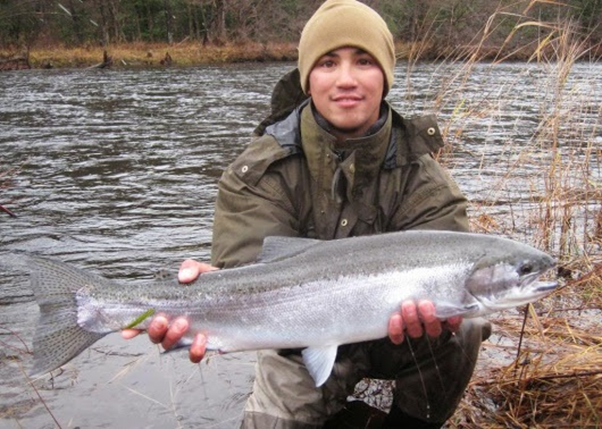
    Chris Tobias with a Great Lakes Winter Steelhead

           For the benefit of those who may not know what a steelhead is, lets first cover that topic. A steelhead is essentially an anadromous rainbow trout (Oncorhynchus mykiss), or trout that have migrated to the ocean, grown to a large size and returned to spawn in the same freshwater system they were born in. Their ability to return to the same freshwater system where they were born is an amazing thing. It’s like they have had built GPS centuries before man. Steelhead spend the majority of their life in the ocean or Great Lakes, feeding on larger size food that inland trout have available and is the main reason they grow to much larger sizes. Unlike salmon, they don’t die when returning to freshwater after spawning. Steelhead may return to the ocean or Great Lakes multiple times. When they do return to freshwater, they provide a very good sportfishing challenge for the fly angler.

         There are basically two types of steelhead. Wild and/or native fish as well as hatchery steelhead. Hatchery steelhead are hatched in man-made hatchery ponds. Most hatchery fish have their adipose fin-clipped such that that they can be identified and harvested by anglers. A “Wild” steelhead refers to any steelhead that was hatched in the river system and usually have wild parents. While wild and hatchery fish may look almost identical (minus an adipose) they are genetically different and will have very different levels of success creating the next generation. It is no surprise that more recent studies have shown that hatchery steelhead and salmon can have a hugely detrimental effect on wild steelhead and salmon.

         Steelhead also differ within the species itself. They can have a very diverse life history. Each strain may be a little different. Some grow larger than others, some act differently, even grow differently. One main difference is the timing of the runs. Anglers refer to them as either a summer run steelhead or a winter run steelhead. The main difference between the two is summer steelhead enters the freshwater when they are sexual immature. Winter run steelhead enter the river sexual mature. The summer fish typically enter rivers anywhere from May to November, which is highly dependent on the specific river. They develop and mature for several months in the river system. This added time allows them to travel further to spawn than the Winter run fish.

         Summer steelhead are always more aggressive and will take dry flies. Summer steelhead are also smaller than the winter steelhead. Summer run fish spend much more time in freshwater than winter run fish. Winter fish may be in the river system only for a few days, and summer fish may be in the freshwater system over a year. Winter fishing conditions such as snow, icy roads, and high rivers make winter fish harder to find and catch.

         Skagit lines are used to present the larger flies. Sink tips are used to break the surface tension and to get the fly down in the water. Winter swing fishing requires shorter rods, shorter Skagit heads, and shorter leaders.

    Click Here to see Perfect Fly Great Lakes Steelhead Flies

    Click Here to see Perfect Fly Pacific Steelhead Flies

    Click Here to see Perfect Fly Steelhead Fly Rods-regular and switch rods/reel

    5. Pre-rigged Trout Flies

         By James Marsh

         The older I got, the poorer my vision became. That is generally true of us older guys and gals. Poor vision can also be a problem for many even at a younger age. Rigging and tying small flies became more and more of a problem for me and often, I had to rely on my much younger wife Angie, to do my rigging and tying, especially when it became necessary out on the water. Of course, the small the flies and lighter the tippet, the tougher they job becomes for anyone with poor vision. Fly sizes in the 20’s become more difficult for those with good vision. This is especially true if the rigging and tying in needed while you’re out on the water fishing. Low light conditions from early mornings to late afternoons as well as cloudy conditions also makes it more difficult.

         For those anglers short on time and/or those anglers who have a difficult time of pre-rigging their flies due to vision problems, we offer several different types of pre-rigged flies. We first began to do this with our Perfect Fly midge patterns. Diagram
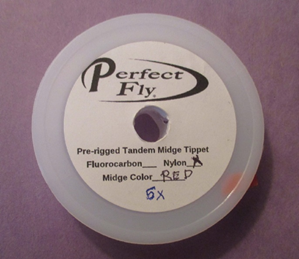
Description automatically generated with medium confidence

    Click Here for Pre-rigged Midge Larva and Pupa

         A couple of years ago we started offering pre-rigged dropper rigs which have a larger size dry fly on top with a nymph or emerger spaced about 18 inches below it. These quickly became very popular.
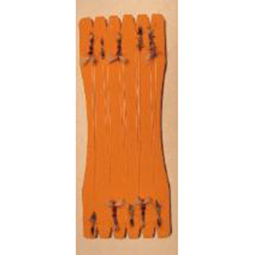
    Click Here for Pre-rigged Dropper Rigs

         About the same time, we began to offer pre-rigged double nymph rigs. They have three feet of tippet above the top fly, which is a nymph or emerger, with a second or lower fly, another nymph or emerger, spaced 16 inches below the top fly.
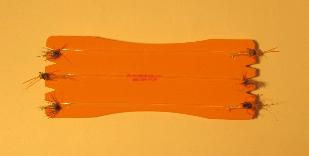
    Click Here for Pre-rigged double nymph rigs

         For the above reasons, it is always best to pre-rig your flies as much as it is feasible to do so prior to getting on the water. This is true of anyone with good or poor vision. For those anglers that want to do it themselves, we sell two sizes of round foam rigging spools, flat foam rigging boards, and two sizes of fly boxes with rigging spools.
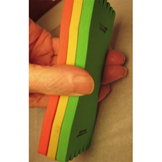
    Click Here for Pre-rigging Flat Foam Boards

    Click Here for Pre-rigging Round Foam Boards

    Click Here for Pre-rigging Fly Boxes and Spools

    6. Holiday Gift Guide

    Our Number One Most Popular Gifts: Our top selling fly-fishing gifts are our Perfect Fly Selections. They come with or without fly boxes.

    Selections of flies are available for the following sections of the United States: They come in good, better and best selections for: New England States. Northeastern states, Mid-Atlantic Streams, Southeastern Streams, Mid-west and Great Lakes Streams, Northern Rocky Mountains, Southern Rocky Mountains, Pacific Northwestern Streams, and California Streams, Great Smoky Mountains Selections, and Yellowstone National Park Selections.

    We also offer Custom Selections for Particular Trout Streams and Lakes. You can email or call us and purchase fly selections for any major trout stream or lake in the United States. They come with or without fly boxes and in good, better and best price options.

    We also offer different price ranges of: Steelhead Fly Selections, Saltwater Fly Selections, Streamer Fly Selections, Terrestrial Fly Selections, Midge Fly Selections, Pre-rigged Dropper Selections, Inshore Saltwater Fly Selections and Saltwater Flats Fly Selections.

    Click Here to see the details of all fly selections

    Click Here to see the details of other freshwater bass, pike, panfish selections

    Our Number Two Most Popular Gifts: Our number two top selling items are our fly rods, fly rod/reel/line combinations, and Getting Started Fly Sets.

    Click Here to see the details of our fly rods, fly rod combinations and Getting Started Fly Sets

    Click Here to see all our Perfect Fly Products

    Help Us Get Your Gifts Delivered on Time

    You can’t watch, hear or read any form of media -TV, radio, newspaper, or Internet, without seeing adverse reports about product shortages and shipment delays with emphasis placed on the upcoming holidays. We are and have been taking steps to prevent running out of product by ordering and/or manufacturing our products well in advance of normal schedules. Please help us get your orders out fast and delivered on time by simply placing orders in advance of normal.

    7. Fly Fishing for Speckled Trout

    By James Marsh
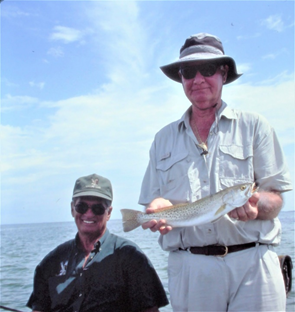
    The late Tom Mann and James Marsh with a nice, speckled trout

         The Speckled Trout, or Spotted Seatrout, Cynoscion nebulosus, are found in the southern United States along coasts of Gulf of Mexico and the coastal Atlantic Ocean from Maryland to Florida. Despite the use of the name “trout”, they are not actually trout but rather members of the drum family of fish. speckled trout from its close relative, the weakfish (also known as gray trout, yellowfin trout, and sea trout). They have a distinct pattern of black spots along the silvery, upper body. They also have a very prominent set of two fang-like teeth in their upper jaw. You do not want to grab a speckled trout by the lips like you might land a bass. You get some bloody fingers. Speckled trout can grow to length of up to 34 inches and weighs of up to near 20 pounds, but fish that size are very rare.

         Along the Gulf Coast, the speckled trout follows schools of shrimp which typically come into the bay and back waters in October or earlier. Along the Atlantic coastline, trout feed mostly on migrations of baitfish such as mullet and scaled sardines typically following them into coastal bays. Specks are usually found in relatively shallow water. Grass beds, oyster bars, creek mouths, dock pilings, stump fields, and drop-offs, generally in less than 10 feet of water. Young, speckled trout can be found in very shallow tidal creeks and weed beds. Their shallow water habitat makes them a good species to catch on the fly rod.

         Many anglers think that fly fishing for saltwater species takes rather heavy tackle such as eight to ten weight fly rods and lines. That is way too heavy for speckled trout. I prefer a 6-weight fly rod and line. There isn’t anything wrong with a 5 or 7 weight rod and line. Yes, you may hook a large size redfish, snook or other species but that’s the exception, not the rule. You should size the rod and line to the flies you are using and a 6-wight should cast any of them you should be using, even for gator trout. By the way, a gator trout is just a name for a large, speckled trout.

    Leaders should be long. We recommend twelve feet as it reduces the chance the fish will see your fly line. It keeps the tip of the line far enough away from the fly to keep from spooking the fish. It also lets you place the fly further past the fish without spooking them. This keeps the tip of the fly line further away and allows you the opportunity to drop the fly further past a fish, without them realizing it.
  • Perfect Fly Journal – October, 2021 Issue

    Content

    Streamer Fishing For Trout

    Perfect Fly Pre-rigged Flies

    Fly Fishing For Trout In Tailwaters

    Featured Streams – Streams Of Great Smoky Mountains National Park

    New Product

    Streamer Fishing For Trout

    Talking to anglers almost everyday of my life, I commonly hear concerns when it comes to fishing streamer flies. Some don’t even have a clue as to what foods some of them imitate. A wooly bugger is an old generic standby streamer fly pattern many anglers have heard of, yet few know what it food it was designed to imitate or for that matter, what species of fish it was intended to imitate. It was designed to imitate a hellgrammite, the large insect larva of the Dobsonfly. It is true that streamers require completely different techniques and presentations than dry flies, wet flies or nymphs. This is being written near the first of the Fall or Autumn season when streamers become even more important than during other times of the year and hopefully, it will answer a lot of questions and concerns many anglers have about streamers.

    A streamer is designed and tied to imitate a “bait-fish”, or a smaller fish that larger fish generally feed on. Examples are sculpin, minnows, leeches, crayfish, and other foods fish feed on. They are fished with an active retrieve as opposed to a dead drift like many other presentations require. Movement of the fly is mostly caused by the angler stripping in line and in some ways resembles the way lures are often fished using casting and spinning tackle. Big fish eat little fish and streamers that imitate small fish often catch large fish. This is the main reason why streamers are a popular type of fly.

    The best places to present streamers are areas where fish have some protection and where they can hide and ambush food. Example are undercut banks, behind large rocks and boulders, and around submerged logs or trees. They can also be effect in current seams and pockets of water. They are usually most effective when presented around cover or during times when the water is off color. They are effective in seams of current. A current seam is the sometime visible but more often an invisible line of the water where two speeds of the current meet. This often creates a small pocket of water where fish watch for food and conserve energy.

    Streamers require a different type of cast than most other presentations. Casting methods vary depending on the weight of your fly. Streamer flies are usually heavier than other types of flies. You should always select a target prior to making the cast. Cast upstream and across. The fly needs time to sink to the right depth. Try to finish the cast with the rod tip up high. Most of the time, the streamer needs to be fished near the bottom, usually but not always, in the deeper water. Under turbulent flows there is usually calmer flows. Trout won’t hold in strong current. They will expend more energy than they can replace with food.

    You need to get your fly down to their level. So, once your fly hits the water, let it sit for a few seconds. At this point, is usually helps to throw a downstream mend in your fly line. Cast across the stream close to the bank. Allow the current to assist by pulling the fly down near the bank. This is especially useful if the bank is deep or undercut. When the fly heads downstream, tilt your rod tip down to as low as it can get and even allow the tip of it to enter the water if needed. You want to keep it there while you strip in line. This allows the streamer to stay deeper during the retrieve. Small two to four inch strips will usually get the job done. Continue stripping in line until the fly is about to approach the end of its drift. Don’t work the fly back upstream against the current. Let it swing across the stream a few feet. Strikes often come at the end of the drift.

    Well designed and tied streamers also have built-in action whereas the components of the fly move with the current as well as with the movement of the fly the angler adds. Most of our Perfect Fly streamers use materials that tend to move with the slightest amount of current. This just makes the fly appear more realistic.

    Perfect Fly Articulated Two Hook Black Head Bull Sculpin

    Many anglers get confused when it comes to selecting colors of streamers. First and foremost, they should match the item they are intended to imitate. Of course, different colors and clarity of water and sky conditions vary the way trout see the streamer. My rule of thumb is to use dark shades of the color of the item you are imitating when the skies are dark and/or the water off color, and to use light shades of the color of the item you are imitating when the skies are bright and the water clear. You want the fish to see the fly. You just don’t want them to see the fly well enough that they can detect it isn’t real or alive.

    If you fish from a drift boat, presenting streamers requires some different tactics. Since the boat is going near the same speed as the current, a streamer presented as I previously described or up and across, would not swing down and across the same as it would when you are wading. You should cast the streamer upstream of but near the bank or other places with cover likely to hold fish and allow it to drift past the area likely to hold a fish. Some anglers use a strike indicator when presenting a streamer in this manner.

    Retrieves can vary from a couple of hard strips and a pause, to a strip, pause, strip, pause type of cadence. If you are not catching anything, before you decide to tie on a different streamer, first try changing the cadence of the retrieve. Presentations need to change with different types of water as well as the type of fly you are using. Fast pocket water usually just gives you a chance to hit a spot and let it sink into the zone with a couple strips before the fly is out of the fish’s field of view. Other times you may be in slower moving water or water with overhead cover such as logs and it may work better to let the fly land just above the target and to let it drift into the strike zone. In deeper water or fast water, It is often critical to get your fly to sink quicker and swim deep all the way back to the boat. To do this in fast water, make a cast and immediately mend the line as it lands. It help to keep the rod tip deep in the water to help pull the sinking line down. This gets the fly deeper quicker and keeps the fly swimming deeper as you retrieve it back to the boat. Keep the fly coming all the way to the boat. Often a trout will hit it when you stop the retrieve very close to the boat.

    Streamers for trout can be rather large, some as long at six to eight inches. It all depends on the particular type of food you are trying to imitate. Size range from those imitating small minnows to large bait fish, sculpin or leeches.

    Rod sizes for streamer vary depending on the size and weight of the streamer as well as the size of the fish you anticipating catching. Six to eight weight rods are used mostly for trout. You want the rod to help you consistently deliver flies to the target with the least amount of effort. Casting streamers for a few hours is a lot like pure work. This is especially true when you are casting large flies and sinking lines for a long period of time. Heavier line weights tend to make the job easier. Fly line selection is often overlooked, but it’s just as important as choosing the right rod. When choosing a line for streamer fishing, consider the length of the average cast you will be making as well as how quickly the fly and line needs to sink after it hits the water? Will you be fishing fast deep water or fast shallow water? Will you be fishing slow moving deep water or shallow moving deep water. When choosing a line, it often pays to use running lines that don’t coil and tangle with sinking heads that deliver large flies to the target with as little effort as possible.

    If you haven’t fished a sinking line, I suggest you practice it. It takes a little getting use to. In many cases, it helps to be able to make a haul cast. When you are fishing large flies and sinking lines, you don’t want to do much false casting. To get a fly down deep and quick, use a short leader. Leaders only three to five feet long are commonly used. This pulls the fly down with the line as it lands and swims. In many cases, longer leaders are best. This is true of streamers fished in shallow water. Tippet size depends on the stream flows and water clarity as well as the type of streamer being fished.

    Perfect Fly Streamers for Trout

    Generic Low Priced Streamers

    Great Lakes Steelhead Streamers

    Pacific Steelhead Streamers

    Great Lake Salmon Streamers

    Pacific Salmon Streamers

    Perfect Fly Pre-Rigged Flies

    Pre-rigged Midge Lava and Pupa

    I don’t know anyone who likes to rig flies while wading. I don’t know any who like to rig dropper rigs, double nymph or midge rigs while sitting on the bank. Most anglers pre-rig the flies at home or in their cabin, camper or motel/hotel room. In fact, I don’t really think many anglers enjoy rigging them anywhere and would much prefer to purchase them already rigged. We first started offering our midge larva and pupa pre-rigged on tippet whereas the larva is the bottom fly with the larva fly positioned about sixteen inches above the larva. That allows you to keep the larva fly on or near the bottom of the stream and the pupa fly above it imitating the the pupa accenting to the surface of the water. We include about two feet of extra tippet above the pupa fly so it can easily be tied to a leader. As a result, our midge sells rapidly increased. The pre-rigged midges are obviously very popular. We were able to keep the price low because our people have a set up that measures and cuts the tippet material for it that speeds the process up as compared to someone who just sits down and does the rigging. As a result of the popularity of the pre-rigged midges, we added other options. There is an option as to whether to use size 20 or 22 hook sizes of our Perfect Fly midge patterns. Another option is to choose from nylon tippet material or fluorocarbon.

    After seeing the popularity of pre-rigged midges, we started offering pre-rigged double nymph rigs. They come with various combinations of nymphs. Noticing the increased popularity of dropper rigs, we decided to start selling pre-rigged dropper rigs. They come with a dry fly tied on about three feet of tippet material with an sixteen inch long extension of the tippet with a nymph which is the bottom fly. The come with several options of different dry flies and nymphs. These proved to be just as popular as the pre-rigged midges.

    Pre-rigged Perfect Fly Midge Larva and Pupa

    Dropper Fly Rigs

    Pre-rigged Double Nymph

    Fly Fishing For Trout In Tailwaters

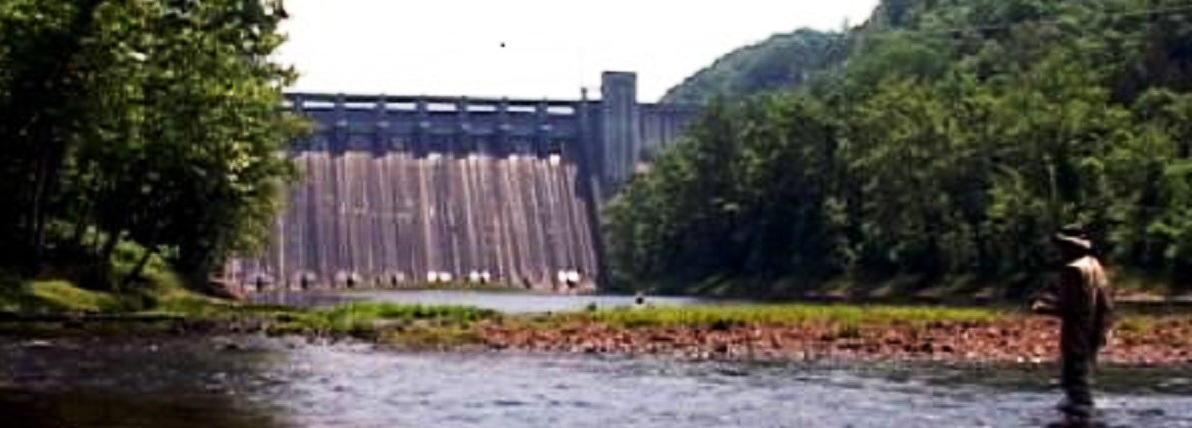
    Norfork River Arkansas

    Trout streams are usually classified in three different categories, tailwaters, freestone streams, and spring creeks. Each of these different types of streams typically supports different amounts of oxygen, vegetation, and entomology. A tailwater is classified as a dam controlled section of water. The dam controls the flows and for the most part, water temperature. Dams are controlled by man and computers which typically regulate the discharges from the dam.

    Finding fish in tailwaters requires some different approaches than finding fish in freestone streams. It is the same in the sense you want to look for are areas fish can hide and feed without spending more energy than they can replace with food. High flows results in swift currents that control where the fish feed. In many tailwaters, the first place you should look would be the banks, but tailwater banks vary greatly and that may not be the case in some situations. There are vertical banks with undercuts sections, plain vertical banks, sloping banks of varying degrees, shallow banks and deep banks. If you are floating a river, you may encounter different types of banks throughout the float. Banks with areas of depressions or cuts often provide good holding areas for trout. Some banks have heavy current and others almost still water. Some banks have rocks and boulders on them, others are slick and clear of anything. You want to fish the banks that have the most structure or cover for the fish to hide and ambush prey.

    There are many other types of cover in tailwaters. Many have ledges out in the stream that are located various distances from the banks. Most of these type of areas are the old river bed banks. When the discharges are up, they are submerged and provide good holding places for fish to feed. Many tailwaters have bottoms with holes where fish can get out of the main current. Others have rocks and/or boulders that are underwater. They can provide protection from the current where the trout can hold and look for food coming downstream. Some tailwaters have grass beds that hold fish. Various types of vegetation can provide areas of good opportunity.

    In many cases, especially on tailwaters not familiar to the angler, it is best to make long cast to the banks and fish them back to the boat or wading angler. This provides a way to cover lots of water in a short amount of time. In cases where the angler knows what cover and holding areas are located below the surface, it is wise to make more accurate presentations of shorter distances in order to cover the most potentially productive water. Sections of a river that are deep and wide have less current speed than those with shallow, narrow sections that has more speed.

    Retrieves should vary depending on water color, stream flow, water temperature, and sky conditions. Again, you want the fish to be able to see your fly. You just don’t want them to see it well enough to realize it isn’t food. A hard strip and long pause technique allows you to fish tight to cover and along the contours of the river bottom. It also allows you to keep the rod tip deep in the water as the fly approaches the boat. Slow moving water provides a greater challenge than fast moving water. It is more difficult to fool the trout. In fast water, fish have a short time to respond when seeing a fly. It must respond quickly to catch the food. The fish respond quicker. When the fish can see the fly for a longer period of time in slower moving water, they get a much better view of the fly. They become more selective and less opportunistic.

    Our Fly Fishing For Trout In Tailwater DVD covers the the special considerations that must be given to tailwaters in order for one to be consistently successful fishing waters where both man and nature can affect the conditions. The program covers a wide variety of streams across the U. S. from East to West, including scenes from over thirty blue ribbon tailwaters.

    Fly Fishing For Trout In Tailwater DVD

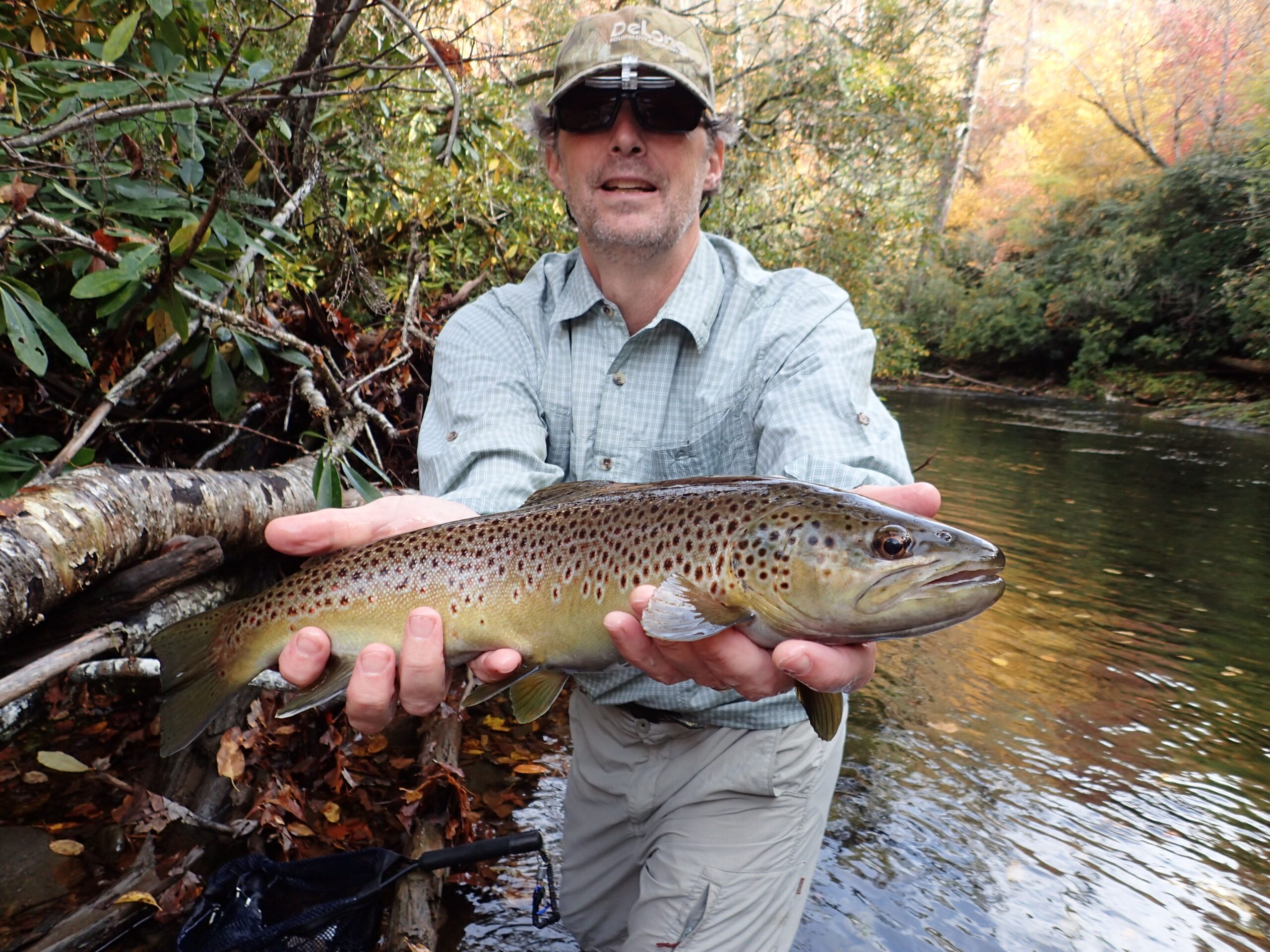
    Derek Porter with a Large Brown Trout caught in Great Smoky Mountains National Park

    Featured Streams – Streams of the Great Smoky Mountains National Park

    Even though Great Smoky Mountains National Park is the most visited National Park in the nation, many anglers are not aware that is has over 2900 miles of streams most of which offer excellent fly fishing opportunities. Many that are aware of that fact are not aware of the diversity of the fly fishing opportunity. There are two species of wild trout – the rainbow and brown trout. There is one native trout, the Appalachian brook trout. There are also smallmouth bass in the lower elevations of of some the streams. None of the streams inside the park are stocked. The park is located in both the states of North Carolina and Tennessee. Fishing license of either state work in the park regardless of the particular state you happen to be fishing.

    The park is a part of the Appalachian Mountain Range that runs from Georgia to Maine. While the highest elevations are not as high as those of the Rocky Mountains, it doesn’t seem like there is that much difference. For example, if you fish the Rocky mountains from Denver, Colorado, you may fish at elevations up to 10,000 feet or so, but you are near the 6,000 ft or higher elevation when you start. That represents a 4,000 foot difference in elevation. In the park you may start depart to fish from Gatlinburg, Tennessee, at an elevation of about 1200 feet but fish brook trout streams that are over 5,200 feet in elevation. That is a 4,000 foot difference. In that respect, there isn’t that much difference in the two different locations.

    There would be little benefit in my repeating many of the things already written in many pages of my website on fly fishing the smoky mountain park waters. All the streams are thoroughly covered. The fish species, streams that hold them and information specific to fishing for them are thoroughly covered. The tackle, gear, foods including the aquatic and terrestrial insects, flies to imitate them is covered. I don’t think we are missing any important information at all but if so, please let us know. I invite you to review the website, bookmark it and to take advantage of its year-round fly fishing opportunity.

    www.flyfishingsmokymountains.com

    New Perfect Fly Product

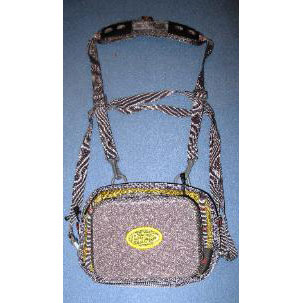
    Waist Pack:

    Waist Packs are alternates to the fly vest. The “Perfect Fly” Waist Pack is one that can carry almost everything a large fly vest can carry.The Waist Pack’s shoulder strap is very wide and padded so that it distributes the load equally and comfortably. The back has a strap for attaching a landing net. The waist pack can also be worn using the adjustable waist strap. Both the waist strap and shoulder strap can be used but either one of them will support it comfortably by itself. The back of the waist pack is ventilted so it stays cool and comfortable against your waist.

    There is a foam fly storage compartment inside the front zippered pocket. It will hold up to 120 flies. The adjustable shoulder strap is wide and padded.It support the weight of the small waist pack comfortably. The adjustable waist stap also will carry the pack comfortably. Some pockets are lined with vinyl so they can be cleaned.

    There are numerous places to attach about any device to the waist pack that you can think of or would ever need for fly fishing. They consist of various type of rings, eyes and retractable snaps.

    Features:
    Size: 6 x 9 x 21/2 inches

    Zippered Compartments:
    3 large ones. One folds down with a foam fly storage.

    Vented Pocket
    2 each

    Shoulder Strap: Large Padded and Vented

    Numerous places to attach various fly fishing items:
    Includes 6 each straps plus a larger strap on the back of the pack. to attach many different types of items such as a fly floatant holder, tippet dispenser, etc.

    Click to see additional Information on the Wader Lanyard

    On Sale for $39.95, regular $59.95

  • Featured Streams – Eastern Prong of Little River in Great Smoky Mountains National Park

    Featured Streams – Eastern Prong of Little River in Great Smoky Mountains National Park

    From the Exit of the park to Metcalf Bottoms

    Fly Fishing The East Prong Of Little River (Exit from the Park to Metcalf Bottoms)The East Prong of the Little River is commonly referred to as “Little River”. It’s one of the largest streams in the Great Smoky Mountains National park. It’s by far the most fished stream in the park. There are two reasons for this. One is easy to guess. It’s one of the best streams in the park. The other is also pretty obvious to those that have fished there before. Much of the stream is the most accessible water in the park. A paved road follows it all the way from its exit from the part to past the Elkmont Campground.Brown and rainbow trout are present in the lower, middle and upper sections of thestream and brook trout can be found in its uppermost part. Little River has some of the best brown trout fishing in the park and due to its size, it has some of the largest brown trout in the park. By lower part, I am referring to the section this article covers. I’m calling the middle section the part from Metcalf Bottoms to Elkmont Campground and the upper section, the part above Elkmont Campground including its tributaries.Fishing Little River ranges from easy to difficult depending on when and where you are fishing it. Most of the stream is fairly easy to negotiate. Some of it isn’t. Some of it is tightly enclosed with trees and overhanging tree limbs and other parts are two deep to wade.Little River is the most popular fly-fishing destination in the Great Smoky Mountain National Park for even more than the two reasons I stated above. It’s also convenient to some larger metro areas such as Maryville, Pigeon Forge, Gatlinburg, and Knoxville. It can easily be accessed from the Townsend area, Wears Valley (the closest), and Gatlinburg.The main part of Little River runs from what is called the “Y” downstream to the park boundary at Townsend. The stream is rather wide in this area and frequented mostly by tourist on float tubes or swimming and playing in the water during the warm months. The only trout present would be the ones stocked by the state of Tennessee that swam upstream from just outside the park in Townsend. In the summer, the water stays too warm for wild trout and the stocked trout too for that matter. Smallmouth bass exist in most of the entire lower section of the stream. There’s only a short section of the main river (after the confluence of the water from the Middle and West Prongs) that’s within the park’s boundaries.Trout found in the lower part of this section of Little River are usually difficult to catch during the warmer times of the year because the warm water temperatures can deplete the oxygen content of the water to a level below that needed by trout. They begin to exist farther upstream at a point that’s far below that generally thought by most anglers. The browns are present much farther downstream than the rainbows. Even so, much of the lower section becomes too warm during the hot summer. The trout that do remain there, become lethargic and difficult to catch. Even if you could, it’s very unhealthy for the trout which can die due to over exertion in the oxygen depleted water. The section below the confluence of Meggs Creek at Meggs Falls, is generally too warm to fish during the hot summer, except the upper part near Meggs Falls and then only during the early mornings and late afternoons. This part of Little River is best fished during the cooler seasons. This section of the river, especially the upper parts near Meggs Creek, does have some  trout and some very large brown trout at that. There are lots of deep pools, too deep to wade in many places. It also has some very rough and difficult to wade water. The banks are generally very high and steep and it is easy to slip off the rocks if you are not very careful, especially when you are wearing wet wading boots. One area called the Little River Gorge, can even be a little dangerous to fish at times. If the water is high, you should be very careful or just avoid wading it altogether.This area is fished by two kinds of anglers. The ones that don’t know what they are doing and are not aware it can be too warm to fish there, and those that know exactly what they are doing and are pursuing large brown trout. These anglers are mostly locals that are very familiar with the stream and the trout in that area.From Meigs Creek upstream past a low to medium gradient area known as“Metcalf Bottoms”, it’s still possible for the water to get above seventy degreesduring the hottest parts of the summer. Most of the time it isn’t too warm and the fishing can be good for both rainbows and browns. If the water is above 65 or 66 degrees F, my suggestion would be to move upstream of Metcalf Bottoms.Water temperatures above the waterfall at an area known locally as the “Sinks”, are agreeable to the trout most of the time. The portion of the stream from the “Sinks” upstream to “Metcalf Bottoms” usually holds far more trout than it is thought to hold by most anglers.The stream gradient is rather low through Metcalf Bottoms and you will find some longer than normal riffles and runs and some longer, shallower pools. The area around the Metcalf Picnic area is usually busy, and at times, even crowded. Fishing can be very good there provided the water hasn’t been disturbed. I should also mention that due to the lower gradient and softer bottom in some areas, this section of the stream has some crawler nymph mayflies and net spinning caddisflies that are not that plentiful in many other areas of Little River. The smoother flows can also demand some difference in the normal pocket water presentations.One tributary stream in the lower section of Little River that’s of importance to anglers is Meggs Creek. This little stream has some brook trout in its upper headwaters. You can access it from the Meggs Creek trailhead located near the Sinks. You have to do some hiking to get to the best water. Its confluence with Little River is easy to find. Meggs Creek Falls are visible from the Little River road.Don’t completely rule out this section of the Little River. It does have its good times. Both species of trout can be caught in the upper part of this section above Meggs Creek at certain times of the year and in the Metcalf Bottom area most of the time. There’s a lot of water (several miles) between Little River’s exit at Townsend and the Meggs Creek area. The closest and by far the fastest way to get to the area of Little River between Meggs Creek and Metcalf Bottoms is through the entrance to the park from Wears Valley.Don’t forget one very important thing. Brown trout can tolerate warmer (lower dissolved oxygen content) water than rainbows. In any stream where both species exit in areas where the water temperature starts to become marginal for trout, you will always find that the brown trout exist farther downstream in warmer water than the rainbows. The upper area of Little River, even some areas below the sinks, hold some very large brown trout. Now don’t go running there to make a few cast expecting to catch one. They want pounce on every fly you toss at them. They didn’t get big being stupid.

    From Metcalf Bottoms To Elkmont: The middle section of the East Prong of the Little River from Metcalf Bottoms to Elkmont is a prime part of the best Little River has to offer. It contains a variety of water but most of it is fast pocket water. There are some long, deep pools; some long riffles and a few long, deep runs but it is mostly pocket water. All in all, it is a very beautiful stretch of water that looks like it has a trout in every square yard of it and it isn’t all that far from being true. Some sections are difficult to wade but you can manage to get around in it just fine most everywhere.Just above Metcalf Bottoms the stream’s gradient increases and becomes typical of what occurs for the next few miles upstream. There are sections ideal for dry fly fishing and others perfect for high stickin with nymphs. There are areas where the trees make it a little tough and you have to watch your backcast and others where it is fairly clear of obstructions. There is one thing it isn’t short on and that’s boulders and rocks. My guess is this section holds about as many trout per mile as any section of water in the park, although I don’t know that for a fact. I do know it has plenty of them and a good mixture of browns and rainbows although it’s mostly rainbows. The very large browns in this section make up for any numbers of browns in all respects. If there were many of the huge ones, there wouldn’t be a living creature in the stream. It has about all a stream of its size is able to sustain.Just about all of the stream is visible from the road that follows closely along it. There are many pull offs along the road to park and some designated parking lots. Some areas have very steep banks and ledges to crawl down and in some places you can easily walk down to the water. You are tempted to try to spot trout from every high point of observation and if you are not very careful, you will do more damage than good. A little movement or motion on high points above the stream gets the trout’s attention very quickly. Unless you learn what to look for, you probably want see them when they are right before your eyes.There is a major problem with this section at times. You may run into tubers and kayaks along the way and if you are not careful, you may find yourself fishing right behind someone. It can get crowded at the so called “peak fishing” times. In April and May the Little River usually has about all the anglers it can support in this section. It isn’t a secrete that it holds lots of trout. The only thing I think is comical about it is that often during other times of the year, such as the month of October and November, I have caught just as many trout as I have caught any other time. I have even caught them on cold winter days when no one else was fishing. I have caught them every month of the year on a dry fly. There are few places in the United States where that can be done.From Metcalf Bottoms upstream to Long Arm Bridge, the stream will change from flowing fairly smoothly to fast, turbulent rapids along with everything in between these two extremes. During the warmer months of the year, you can count on a lot of recreational activity in this section of the river. During those times, you may consider fishing very early or late in the day. After all, that’s not a bad strategy to utilize during the summertime for other reasons.  From the Long Arm Bridge to the Elkmont Campground you will find some of the best water that exist in Little River. It certainly isn’t a secret. It is fished as heavily orheavier than any section of water in the park but it’s for very good reasons -primarily easy access and lots of trout. Some of this area contains the classic pool,riffle, run stream makeup that allows the trout the opportunity to select prime liesthroughout the changing seasons.  You may occasionally become frustrated withtubers in this area, but much less frequent than downstream. Most likely it will be other anglers that frustrate you. We just avoid it when it is crowded, or even close to being crowded, and fish other places in the park. Most of the time we fish Little River, few others are fishing. Often we are the only ones in a few miles of the river.  We prefer to fish it when the fishing is considered “quote”, bad or not good. We seem to always catch plenty of trout. What’s almost comical about the quote “good and bad” fishing days is that often anglers catch very few trout on the “good” days. You will see this happen often in April and May, two of the quote “best” months of the year. There will never be any shortage of excuses though. There’s always plenty of things anglers can blame.My advice is to completely ignore what others have to say about their success, or lack of success, and go whenever you can go.  I’ll put it this way. If the water in this area of Little River isn’t completely out of its banks and it’s above freezing air temperatures, you should be able to catch trout. You probably won’t be able to do it fishing the same Jake’s bead-head fly or green weenie you may normally fish when anyone that can cast can catch trout. Jake (a name I just threw in, not any particular person) may be the one that’s the bead head. You may not be able to fish the same Purple Trude or whatever it is you were told was the “hot fly”. Most likely you may not be able to fish the same fast water you fish 100% of the time and do well.  Don’t you think it would probably help to know something about what your trying to imitate, where the trout are holding, and a few things many anglers don’t have a clue about? If you focus on what is going on in the water and not on what anyone else has to say about the fishing, you will eventually start catching trout most every time you go. The trout don’t pay any attention to what anyone has to say and neither should you. They aren’t going to starve in spite of what Joe Blow has to say about it. They feed every day and as long as they feed you can catch them.I’m not about to try to count the times we have fished this section of the Little River during the last ten years. Our video logs are full of trips to this area. Some of our best days in the park have been on this section of Little River as well as the section above Elkmont that hasn’t yet been posted. We have had a few tough days on this section of Little River, but only a very few and they really were not all that bad. At times, we enjoy fishing on the worst possible days just to prove to ourselves that we can catch trout under adverse conditions. It’s amazing what you can catch when you simply make the effort. I get very frustrated when I have a difficult time catching trout. It just drives me that much harder towards trying to succeed. To me, that’s one of the most enjoyable aspects of fly fishing for trout or any type of fishing for that matter. Overcoming the difficulties, or maybe you could call it outsmarting the trout, is the thing that should give you the greatest amount of pleasure. I don’t like the later phase very much because when you think about the fact their brain is about the size of a pea, it doesn’t make you feel very successful to say you outsmarted them. Anyway, just being able to catch trout when it’s easy to do so, doesn’t quite cut it for me.Most of the time when anglers have a tough day of fishing, it’s because they are set in their ways of fishing, using the same flies, the same methods of presentation, and doing the same basic things over and over. They may change from a dry fly to a nymph or vise versa, and change flies several times, but that’s about the extent of their versatility. The traditional methods of presentation and the generic and attractor flies work okay when conditions are favorable but not otherwise. It’s easy to summarize most of the problem. When the trout are feeding anywhere other than the fast water where they are easily to fool, most anglers can’t catch them. They think the fishing is lousy and pass it off as if it has nothing to do with their fishing skills or their knowledge about the trout and the food the trout survive on.There are many very productive hatches and just as important, periods of time leading into a hatch, that are completely ignored by most anglers. Actually it isn’t so much that they are ignored as it is they are passed over by anglers not familiar with the stream’s aquatic insects. Some of the insects are never mentioned mainly because little to nothing is known about them. There are many days anglers are complaining about lousy fishing conditions when there really isn’t a good excuse for not catching trout. I rambled off the main subject, but that’s what was on my mind.This section of Little River has several tributary streams. Laurel Creek is a very small tributary stream that has some small rainbows and brook trout in its upper reaches.  It passes under both Little River Road and Elkmont Campground Road near the turn to Elkmont. It’s so enclosed by rhodendrum bushes that it’s hardly noticeable.Jakes Creek is a very small but a very good little tributary stream that comes into the Little River in the Elkmont Campground. Small rainbows make up the bulk of its trout but it also has some brown trout. The size of some of the brown trout may fool you. High water in the Little River would be about the only justifiable reason to fish either of these two little tributary streams considering the fact you have to pass miles of Little River to get there. They also provide some seclusion from other anglers.In a recent article on Hazel Creek, I made the statement that I didn’t think any stream in the park was any better than Hazel Creek and I will make the same statement about this segment of Little River as well as the segment above Elkmont I haven’t posted that’s coming up in a couple of days. Simply put, “the streams in the park don’t get any better than these two sections of the Little River”.

    Elkmont to the Headwaters: The East Prong of Little River from Elkmont to its headwaters is another very good section of water that’s as good as any in Great Smoky Mountains National Park. Most anglers want to travel upstream a good ways to get away from everyone and there is certainly nothing wrong with that but you certainly do not have to in order to catch plenty of trout. Just upstream of the campground at the Bridge over Little River at the Little River Trailhead you will find some excellent water. For some reason (I think it’s because it appears to be to easy to access to be any good) anglers don’t tend to fish the first half mile or so of the area above the bridge. Angie and I have fished this area many times when there was not anyone fishing the area yet the parking area was full of vehicle that obviously belonged to anglers. Most hikers and tourist don’t have their vehicles covered with fishing decals and logos.It’s one of Angie’s favorites spots on Little River and for good reasons. She always catches several nice trout before we get from the bridge to the first old house on the stream bank headed upstream. The large pool near end of that stretch always produces for her.  I video taped her catching five trout out of that one pool one cold December day and three of them were good size brown trout. Yes, I did say out of the pool, not the fast water. There have been plenty of days we have caught a lot of trout (it would surprise you if I listed the numbers) within the first mile or so upstream from the bridge.You may think I am revealing a hot spot, but trust me, it’s no better than the next few miles of the stream. All I am saying is that we usually don’t strike out on a long hike upstream because we don’t have to. I should also say we have watched several other anglers fish that area and most of the time, not even cast in the pool I’m referring to. We have yet to see anyone catch the first trout out of it even though i have seen Angie catch several dozen out of it over the last few years. She refuses to let me fish it. I usually start fishing just past there and catch plenty of trout heading on upstream. We have walked two or three miles before we have started to fish and it seems to not make any difference. The entire upper millage of Little River is just a good stretch of water obviously with a high population of trout although I have no way of really knowing if it actually has more than other areas of Little River or not. I haven’t seen any shock test results from the park and fishing only allows you to speculate on the population.The trail, which is an old road, is easy to hike. Its gradient is continuously, slightly uphill and not steep at all. For some reason, the size of Little River changes very little as you go upstream. It stays near the same size for a long way. Something else noticeable is that the brown trout continue to appear as if there were not any change in the upstream population of trout.There are numerous tiny branches that feed into Little River as you head up stream. The first one of any size is Huskey Branch and it’s very small. The first major tributary stream you will reach is Fish Camp Prong. Its a major tributary of the Little River with several tributaries of its own. It’s located about four miles upstream from the Little River Trailhead. That would be a tough one day trip for many anglers and for that reason, most anglers prefer to stay at one of the campsites on the upper Little River to fish it. Of course, I know some younger guys that hike there to fish on a one day trip as if that wasn’t a problem at all.The trout in Fish Camp Prong are mostly rainbows with a few browns in the lower sections. Brook trout begin to show up farther upstream. It has lots of small branches that flow into it. The larger tributaries of Fish Camp Prong are Ash Camp Branch, Buckeye Gap Prong, Silers Creek, and Goshen Prong. Goshen Prong trail follows Fish Camp Prong from its confluence with Little River for about three miles and then upstream on Goshen Prong itself. These streams in the upper end and headwaters of Fish Camp Prong all have populations of brook trout.Not far upstream above Fish Camp Prong on the main stem of Little River is Rough Creek. Rough Creek Trail follows it for about two miles. Farther upstream on the main stem you will find Meigs Post Prong and Grouse Creek. There are several tiny prongs all the way up to near the Appalachian Trail near Clingmans Dome that feed these uppermost creeks. Most of these little streams above and including Meigs Post Prong hold brook trout.Campsite #24 is probably the most popular campsite for anglers. It’s located just below the Rough Creek confluence. Campsite #23 is about another three miles upstream on Goshen Prong Trail from the confluence of Fish Camp Prong and the main stem of LIttle River. This one is also a popular site for anglers. You can also reach it on the Goshen Prong Trail from the Clingmans Dome Road. It is shown to be 4.4 miles from the road to the campsite. If I used this approach, I think I may want to just head on downstream from #23 to Elkmont and leave my vehicle at the trailhead to pick up later. I’m only kidding but it is a steep decline according to the elevation profile on my GPS. There’s also a remote site #30 near the end of the main prong of Little River. It must be accessed from downstream.I opened this article with the statement that this section of Little River and the section from Metcalf Bottoms up to Elkmont Campground is as good as any section of stream in the park. Remember, I didn’t say better than any – I said as good as.It isn’t the stream that’s going to make a substantial difference in what you catch in quantity or quality. It’s your fishing skills but even more important, its your understanding the trout, their habitat, behavior, and the food they eat.I received so much email from comments I made in yesterday’s article along the lines of fishing success, I will elaborate some more on the subject. The streams in the park are all small, fast pocket water streams. Catching fish when conditions are great usually isn’t that much of a problem for anyone that can cast twenty feet and follows a few basic procedures – staying hidden, getting a good drift, etc. Its all the other times when fishing isn’t that easy – the two months of very hot summer weather, the two to three months of cold weather, the hundred days of low water, the few days of high water, and the many days it’s raining, snowing, the wind is blowing, it’s storming, someone’s fishing in front of you, tube floaters are running over you, etc, etc. In other words, seventy-five percent or more of the time. It’s during those times, which is the majority of the days anglers could fish that most anglers have a difficult time catching very many trout. It’s easy and self satisfying to just pretend it’s the “poor” fishing conditions that’s the problem. Some anglers are completely satisfied on waiting on conditions to change to where its easy to catch trout. Many are not even aware that it’s really their way of fishing and not the fishing conditions that’s the problem.  They think they are doing everything right and its because the fish are not feeding. They think that’s just a part of fishing and for them, it is.There isn’t anything wrong with going fishing only when it’s very easy to catch trout. It should be fun first and foremost. But for those anglers that realize lack of success usually isn’t because the fish won’t eat, it’s their knowledge and skills that’s lacking, such a causal approach isn’t good enough. Many anglers enjoy getting out in the outdoors whenever they can and they want to be able to catch trout wherever and whenever they go. Some anglers take their fishing rather seriously and some don’t. Some are satisfied with mediocre results and some aren’t.I’ve always been the type that wanted to keep improving and keep learning more and more about the sport, never being completely satisfied with everything. It’s successfully meeting the challenge of being able to consistently catch fish that gives me the most satisfaction. It’s competition but not with other anglers. It’s competition with the fish and the elements Mother Nature hands us.Most of what I write about is oriented towards helping someone become a better angler. I learned many years ago that being consistently successful required learning a lot about the fish and the food they eat, irrespective of the species of fish you were after. I know for certain that if I had not of used that approach, I wouldn’t have been able to learn a living for the last thirty years from TV shows, instructional videos on fishing and a few other closely related outdoor activities such as boating.One reason I mention this is because I often fail to put the fun and enjoyment element into what I write about fishing. That’s not only because I take it seriously. It’s also because I am not a very good writer, especially when it comes to adding the entertainment aspects of it. Well, on second thought, maybe some of you get a kick out of seeing how I can abuse the English language.

  • Basics of Fly Fishing for Smallmouth Bass

    Smallmouth Bass

    Smallmouth bass,(micropterus dolomieui) are members of the sunfish family. Their original native range was basically in the Mississippi River and Ohio River basins including the great lakes. They exist in the Tennessee River system as far south as Alabama. Originally, they were not found west of about the center of the United States. They have been stocked by various parties and means since the advent of the railroad and in most all cases, reproduce on their own. Now, they are found throughout the west, mid-western and eastern United States in all but three states.Males are generally smaller than the females, with grown males averaging about two pounds, and females about three to six pounds. Like most all fish, the smallmouth bass growth rate is determined by the amount of food present in their habitat, and the average water temperature. The average water temperature is a factor in determining the growing season of the smallmouth bass as well as its food.The color of the smallmouth bass can vary from lake to stream, stream to stream and lake to lake. They usually have a dark brown back. The sides of the fish is usually a bronze to brown color. They have the nickname “bronze backs”. Some anglers call them brownies. In some water you will find they are tinted green. Their stomachs are a light yellow to white color.  The more you know about smallmouth bass and the food they rely on for their survival, the easier it is for you to catch them. The Smallmouth Bass is a predator. They feed mostly on minnows, baitfish, crustaceans, aquatic and terrestrial insects. Where crayfish are abundant, they usually comprise over two-thirds of smallmouth’s food.Although Smallmouth bass do school at times in certain types of water, they generally don’t cruise around looking for food. They are predators that like to hide and attack their prey. The wait for their prey to come to them and then attack the prey with a short, sudden burst of speed. When they are schooling, they are usually working together to push schools of baitfish up to the surface where they panic and become easy to catch prey.Two things to always look for when your fly fishing for smallmouth is food and cover. For example, if smallmouth bass exist in a lake or stream, rest assured that anywhere you find both rocks and crayfish, you will usually find smallmouth. You often have to determine the depth of water the fish are likely feeding in. This changes with the seasons, water clarity, and available light.Smallmouth bass found in rivers have to deal with current. Those found in lakes, generally don’t have to deal with much current and in some cases, practically none. As a general rule, river smallmouth have to consume more food than those found in lakes. They spend a lot more energy swimming in current and they have to replenish it by taking in more food than bass in still waters. River bass are almost always stronger than lake smallmouth. You will find that they have a different habitat from lake bass because they hold in areas that break the flow of current. They tend to relate closer to structure. They tend to hold in the slack water out of the current and ambush prey that has to deal with the current. Lake smallmouth bass also hide and attack their prey from cover, but current doesn’t play a role in it. There is an exception to that and it is that in man made lakes and reservoirs, discharges from dams can creates current in the lake and/or reservoir. In those cases, the smallmouth may position themselves in slack water, out of the current where they conserve energy and attack their prey. .In most lakes and streams, the easiest time to catch smallmouth on the fly is during the pre-spawn season. The fish are usually hungry and holding nearby the shallow water they will spawn in. Like most other fish, the spawning habits of smallmouth bass greatly depends on the temperature of the water. The males begin building beds when the water averages and remains for a day or two at about 55°F. The females bass will move to the beds shortly after it is finished. The actual spawning process will take place at water temperatures ranging from 60° to 65°F. The females usually deposit about 7000 eggs per pound of body weight. During this time, the male releases milt in the bed.

    The most fun you can fly fishing for smallmouth bass is catching them when they are feeding on the surface. Nothing beats the fun and excitement of seeing a five, pound smallmouth come up from the bottom of a clear water stream and crash an imitation of a frog on the surface. It is often easy to attempt to set the hook before the fish actually has the fly in its mouth. The problem is, day in and day out in the typical smallmouth lake or stream, they are not feeding on the surface. Far more often than not, they are feeding beneath the surface and often near the bottom. Unless you just want to be a part time smallmouth angler, you better learn to fish to fish you can’t see as well as those that feed on top.Finding Smallmouth In Small Streams and Creeks:There are two types small streams and creeks. There are those large enough to float and those that are too small to float or restricted by regulations that do not allow boats. The techniques required to fish from a boat, small aluminum boat, pontoon boat, drift boat, kayak or other type vessel are quite different from those used wading. Many streams that hold smallmouth bass are just to small to float. You have to wade or fish from the banks to fish them. Fly fishing for smallmouth from the banks of a stream, usually limits what you can do.Wading Small Creeks and Streams:When wading, you have to be use stealthy approach. Keep in mind, in water clear enough for you to see the fish, the fish can also see you. You also have to wade quietly, not kicking or moving rocks and gravel around on the bottom of the stream. The bass can also hear you, or detect subtle vibrations in the water. Ripples you create when wading can also spook the bass.Any small stream that supports a good population of smallmouth bass will have some deeper holes or pools. A big smallmouth can be found in a small hole or pool, but those that are rather large, usually hold the larger size smallmouth. There should be some holes that are seven to twelve feet deep. This is necessary for the smallmouth during the hot summers and cold winters. During the spring and fall months, they are usually found much shallower. These are not hard rules, just general ones, so be aware this varies with water temperature, clarity and amount of light.  In some cases it is possible to sight fish to smallmouth. This is not only effective at times, it is a very exciting way to fly fish for them.If you slip up to a pool and the water in front of you is fairly deep with good structure, but you fail to see any smallmouth, give it a little time. The fish can be hiding under something or just out of sight and you won’t be able to see them until they move. They can be spotted moving much easier than they can when they are not moving.Keep in mind that water with large rocks and boulders, or downed trees or deadfalls, create breaks in the current and provide hiding places for smallmouth bass. Areas of wide open water with little to no structure isn’t near as likely to hold very many fish. That written, in such cases, keep in mind that the only structure in such an area usually hold the only fish there, so don’t overlook that.A point to keep in mind, is during the warmer months of the year, smallmouth relate to the current and will never be far from it. You should position yourself downstream of boulders and eddies, and cast upstream, allowing the fly to drift drag free to you. As a general rule, smallmouth bass will be positioned behind the rocks and boulders on the downstream side. This isn’t always the case. They can be positioned in from of larger rocks and boulders in swift current because there is usually a relatively small dead area of almost still water.Fishing Small Creek and Streams From A Boat:Most small streams can be waded, but many don’t have the proper access points to wade from the banks. Others are too deep to wade and require some type of a boat or a float tube to fish. Float tubes are handy for those that don’t mind floating around half submerged in the water. Some streams move to fast to fish from a float tube. The water in the stream need to be very slow moving for their use, or otherwise, you can get into trouble fast.As far as the use of boats, often the one or two man type pontoon boats are most practical They are easier than most boats to tow, load, unload and launch. Other small streams fish well from small aluminum or fiberglass john and/or v-hull power boats. In many small streams, the best vessel is a canoe. It all depends on the particular water and the number of people you need to accommodate. Some streams prohibit the use of gasoline powered boats and require electric motors or paddles.In each situation, you have to take into consideration where you can access and exit the stream and how long it takes to get from one point to another. You have to know the stream well,  or make absolutely certain there are no points you will encounter where to water too fast to handle, the water to low to navigate, or numerous other obstructions or dangerous situations you could possible encounter. Knowing these types of things is critically important in some cases, because you can become stranded in a stream after dark if your not careful. In other situations, you can reach your take out point much earlier than you want to, limiting your time to fish. Even worse, you can find yourself in a dangerous situation due to conditions and circumstances you were not aware of. Each stream much be carefully analyzed for any possible problems, not to mention the practical problems of catching fish.Finding Smallmouth In Lakes and Large Rivers:In clear lakes and large, clear rivers, smallmouth will travel great distances to take a fly during the middle of a sunny afternoon. If you can see the bottom of the stream or lake, chances are they can see your fly very well. In fact, they can see extremely well in clear water. The first and foremost way to fool them into taking your fly is to make sure your they look as realistic as possible. You have to try to take advantage of the fact they can see them well. You need to disguise your flies by matching them to the size, color and shape of the local forage. You can also use erratic movements to fool them, or in other words, keep the fly moving such they don’t get too good of a look at it.Sky conditions and water clarity affect how well the smallmouth see your fly. If your fishing the fly on or near the surface, wind can also affect how well they can see it. During the middle of the day in water less than ten feet deep, you can often fool the bass by imparting short twitches with the rod to make the fly dart from side to side. You can allow the fly to sink to different depths and begin the twitching action and rhythm. Often, the smallmouth will crush the fly and other times they tend to just follow it as if they are just curious about it. When this happens, it often works to just let the fly sink deeper and then resume the twitching rhythm.  Often the key is finding the bait. You can sometimes see the bait but it not, a fishfinder, or sonar device can find it. When you spot globs of baitfish holding over structure, you will often find smallmouth feeding on them. In this case, it is usually best to mark the spot with a buoy, back off and return to drop a streamer in the area of the baitfish. This works well if the bait is staying in the same area, but often they are on the move, not holding in one area over structure. When they are on the move, smallmouth feeding on them will follow them. In this situation, you can’t just go back to where you caught them the day before and count on catching them. You usually have to relocate them on your fishfinder. If the smallmouth are not feeding on or near the surface,on the banks of the lake, and you don’t find the baitfish, your probably just waisting your time casting.You don’t have to use a fishfinder to catch smallmouth. Many anglers prefer to do it visually. The most obvious locations in lakes that are clear are rock shoals and drop off points. As mentioned in our other articles, smallmouth bass are predators that rely on hiding and attaching their prey, as well as chasing it down in open water. The fish usually relate to some type of object or structure such as a rock, log or weeds. They can also be found in schools. When they do congregate in schools, you will usually find the smallmouth bass are near the same size.Most lakes and large rivers require some type of boat to fish. Some are suited well for tube floats and others are too dangerous to fish from a float tube. Boats can range from a large variety and types ranging from motor boats of many different types; small boats with electric trolling motors; pontoon type vessels ranging from the one-man type to larger pontoon boats; drift boats; and kayaks,There are some lakes and large rivers that have areas of water with smallmouth bass that you can wade and fish. These places can be accessed in some cases from the bank and others require a boat to access the areas you intend to wade. It all depends on the particular water.The fly tackle, gear and equipment you need, greatly depends on which of these type of fishing methods you use. That will be covered under the gear, tackle and equipment section of this website.

  • It’s Been A Rough Year and A Half

    In very late December of 2019, I choose to have very major heart surgery. I was told at my age of almost 77, I had a thirty percent chance of not making it through surgery to remove calcium from surrounding my heart. I didn’t like the alternative and choose to have the surgery. A little over two months later, I was released to come home from UT Hospital with home care nurses coming in about every day for three more months. Angie had to take over and run a company she knew the fly fishing part of very well, but with no experience running the business end of it including updating our Perfect Fly, Smoky Mountains National Park and Yellowstone National Park websites.

    I woke up one morning in April, 2020, noticing the nurses coming to see me at home were wearing face mask, thanks to a new problem facing everyone in the entire world. I don’t have to write anymore about that because that is a subject of a problem we are all sick of hearing about. At the end of my first year of making it through surgery at the time I was back up to 175 pounds from 126 pounds after surgery, able to live an almost normal life, our website host Yahoo, informed me that as of March, 2021, they would no longer update my existing websites, which for the most part were updated on a daily basis. I had a three months notice that I had to have three major website completely redone on a different format. That was yet another major setback that not only cost up several thousand dollars for new website work but additional mega work on our part to get the business back up to full stream. In addition to the cost of the new sites, we had to burden a major loss of business for approximately six months. By June of this year, we were back up to full stream in all respects. That is where the title, “It has been a rough year and a half” came from. Hopefully, you can also understand why we fell about a year and a half behind putting out our normally quarterly issued “Perfect Fly Fly Fishing Journal”.

    I hope you don’t think I am asking for any sympathy. To the contrary, I am just explaining why we had the delay in putting out the Journal. Also, please understand I am a very, very thankful person. Thankful for my great UT doctors, many friends, my wonderful wife and family, and to God for allowing me to be able to sit here at 77 years old typing this article feeling happy and for the most part, healthy. I have a lot to be thankful for. My two daughters who fished with me in their early years still enjoy fishing and fish together often. Two of my three grandchildren have fished me me several times and in fact have pictures from ages of about 5 years old and up on our websites. About a year ago, my granddaughter Jana Ingram, graduated from the University of Alabama. Yesterday, my grandson James Deupree, graduated from Auburn University. My other grandchild, Bella, is a extremely talented ballet dancer that will soon finish high school and head to college. Our Perfect Fly business is running full stream with more customers and stronger sales than ever. What more could anyone ask for?

    I hope everyone enjoys this issue of the Journal.