The regular fishing season in the park began on Saturday May 23, 2026. If you are planning a trip to Yellowstone, give us a call at 800 594 4726 or email us at sales@perfectflystore.com. We can help steer you in the right direction for the time you will be there and provide a list of flies and gear you should be using at the time you will be there. At this time, good hatches and taking pace throughout the park. The flies listed below are for the first two weeks of the season. You will need some different flies than those listed below for the coming days ahead. At this time, there are less than a week left in the regular open season.
Perfect Flies are designed and tied to to imitate and behave like the natural foods the trout rely on to survive as much as possible. The more your fly looks like and moves through and on the surface of the water like the real things, the higher your odds of success.
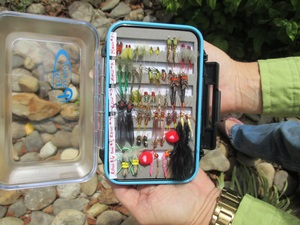
The main things you will need are the right flies to match the trout’s diet. Perfect Flies are the World’s Best and actually look like the real things they imitate. The Perfect Fly Store can provide a custom fly selection with flies that will match the insects and other foods the trout are feeding on at the time you are fly fishing the streams and lakes of the park. In order to match the hatches with the right flies, one would need to email or call us with the approximate date of arrival, number of days you will be fishing, and number of anglersfishing, and if important to you, the budget dollar amount you would like the selection to include. We can do this for one person, or if two or more anglers would be fishing, we can divide them into separate packages. If you prefer so, we can include a fly box (four different sizes of 2 sided, waterproof fly boxes) for the selection or each selection is you purchase flies for more than one person and want the flies separated. The average cost of the flies is $2.95 each. The fly box cost ranges from $17.00 to $19.00 each depending of the size. We label all flies so you can easily identify them, or if provided in a fly box, we can provide a index type labeling of the box so you can easily identify them. Our Perfect Flies, many of which were developed to match aquatic insects in Yellowstone National park, look much like the real things and provide a much higher percentage of hook ups than the standard or generic trout flies. To place an order, call us at 800-594-4726 or email us at sales@perfectflystore.com.
Perfect Flies are designed and tied to to imitate and behave like the natural foods the trout rely on to survive as much as possible. Many were developed from samples of insects taken from Yellowstone National Park. The more your fly looks like and moves through and on the surface of the water like the real things, the higher your odds of success.
The regular fishing season in the park begins Saturday May 23, 2026, or six days from now. If you are planning a trip to Yellowstone, give us a call at 800 594 4726 or email us at sales@perfectflystore.com. We can help steer you in the right direction for the time you will be there and provide a list of flies and gear you should be using at the time you will be there. At this time, good hatches and taking pace throughout the park. The flies listed below are for the first two weeks of the season. You will need some different flies than those listed below for the coming days ahead. At this time, there are less than a week left in the regular open season.
The main things you will need are the right flies to match the trout’s diet. Perfect Flies are the World’s Best and actually look like the real things they imitate. The Perfect Fly Store can provide a custom fly selection with flies that will match the insects and other foods the trout are feeding on at the time you are fly fishing the streams and lakes of the park. In order to match the hatches with the right flies, one would need to email or call us with the approximate date of arrival, number of days you will be fishing, and number of anglersfishing, and if important to you, the budget dollar amount you would like the selection to include. We can do this for one person, or if two or more anglers would be fishing, we can divide them into separate packages. If you prefer so, we can include a fly box (four different sizes of 2 sided, waterproof fly boxes) for the selection or each selection is you purchase flies for more than one person and want the flies separated. The average cost of the flies is $2.95 each. The fly box cost ranges from $17.00 to $19.00 each depending of the size. We label all flies so you can easily identify them, or if provided in a fly box, we can provide a index type labeling of the box so you can easily identify them. Our Perfect Flies, many of which were developed to match aquatic insects in Yellowstone National park, look much like the real things and provide a much higher percentage of hook ups than the standard or generic trout flies. To place an order, call us at 800-594-4726 or email us at sales@perfectflystore.com.
Perfect Flies are designed and tied to to imitate and behave like the natural foods the trout rely on to survive as much as possible. Many were developed from samples of insects taken from Yellowstone National Park. The more your fly looks like and moves through and on the surface of the water like the real things, the higher your odds of success.
There are times you may encounter a few different insects hatching and other times when it appears there is nothing hatching. There are a lot of different insects that hatch during the Fall and Winter seasons. Most hatches take place during the Spring and Summer months of the year. Of course, this varies greatly with the section of the country you fish and the type of water you are fishing. A freestone stream, tailwaters, spring creeks and lakes may have a few different hatches. It is a fact that many anglers don’t really know how to go about fishing hatches, or for that matter, what is important about them. This article isn’t going into any detail on how to fish any specific aquatic insect. It is intended to point out some of the most important tips about how to go about fishing the Fall and Winter season hatches. 1. Why Hatches Are Important When an aquatic insect hatches, it must come out of its hiding place – from underneath a rock, crevices between rocks, out of a grass or moss bed, or in some cases, a burrow. In order to hatch, meaning emerge into an adult insect, it must develop its wing pad and either accent to the surface of the water, or crawl out of the water to emerge. When it emerges to the surface, it becomes directly exposed to the trout, or a sitting duck, you might say. When the insets emerge to the surface, they are very easy for the trout to acquire during the hatch. The emerging insect will have to get through the surface skim to dry their wings and fly off the water. It may be on the surface of the water for a few seconds for a minute or more. Those insects that crawl up the bank, a rock or boulder or anything else are exposed to feeding trout but not as easy for the trout to acquire as those emerging out in the water.
After the insect hatches into an adult, the males and females of the species much breed in order to produce new generations. This is usually done above the water they came from allowing most of them to fall dead to the surface of the water where they emerged from. Females mate with males, fertilize the eggs just prior to oviposition, and drop or lay them on the water and in some cases, the banks of the stream. Of course, when they land on the banks or anything other than the water, they won’t hatch. A few insect species are bi-brooded and become a factor for anglers to match at two different times during a calendar year, but this is a one time event per year for the great majority of aquatic insect species. 2. What Flies Should You Have During Hatches? You should have flies that imitate all stages of life that trout eat of all the aquatic insects that may hatch while you are on the water. For mayflies, that includes nymphs, emergers, duns and spinners. For stoneflies, that includes nymphs and adults. For caddisflies, that includes larva, pupa and adults. For midges, that includes larva, pupa and adults. 3. When To Fish Nymphs or Dry Flies (Below water or on the surface) I’m often asked, when to fish a nymph, or larva, or dry fly during a hatch. It depends somewhat on the particular insect, but in general, you should fish a mayfly or stonefly nymph, or a caddisfly or midge larvae during the morning hours, and a dry fly to imitate the mayfly dun, adult stonefly, or adult caddis or midge, during the afternoons. Early in the season, most of them hatch during the warmest part of the day. During the mid to late afternoon, most mayfly spinners return to the water to mate, deposit eggs and die. Caddisflies and Stoneflies usually deposit their eggs from the middle to late in the day. 4. What Fly Should You Fish First? It depends on the time you start fishing, but always the one that imitates the most plentiful and available insect at the time. In the case of multiple hatches, and there is often more than one insect that may hatch the day you fish, and assuming you start in the morning, fish the nymph or larva of that insect, or in the case when other types of foods are plentiful and more available, such as terrestrial insects, crustaceans, or baitfish, fish imitations of that food. If you are not sure which food or insects are most available for a given stream and time, you can always email or call us at Perfect Fly, and we can help you. 5. Where Should You Fish The Stream? Some trout streams are ninety miles or longer. Most all are at least five to ten miles. Whatever insects are hatching at the time, rest assured they are not hatching in the same place on the stream. They are usually hatching only in a small section of a stream ranging from a few hundred yards to maybe as much as five miles. In cases where the elevation of the stream changes a lot, they usually start at the lowest elevation and move upstream each day, remaining in one section for only a very few days. 6. The Type of Water Is Also Important Different types of aquatic insects hatch in different types of water. Burrower, crawler, and swimming mayflies live and hatch in slow to moderate water. Clinger mayflies live and hatch in fast water. Stoneflies mostly all live and hatch in fast water. Caddisflies hatch in different types of water depending on the species. When you are fishing a stream and a certain insect is hatching, spend your time only in the type of water that insect lives and hatches in. There is much more you should know about hatches, but hopefully, these tips will help make your next trip more productive. Each of our Perfect Flies has a page of information under the info link on our website on how, when and where to fish them. If you are planning a trip and don’t know what insects are hatching at the time you will be fishing, send us an email, or call us and we will be glad to help you. email: sales@perfectflystore.comTel. 800 – 594 – 4726 website: www.perfectflystore.com
Winter isn’t most fly anglers favorite season to fish because most anglers just don’t like cold weather. There are exceptions. Those stream which get too warm for trout to live in and are stocked with trout from a hatchery, can attract good numbers of fly anglers. Fly-fishing for stocked trout leave a lot to be desired. That’s fairly common knowledge but most anglers don’t realize that fly fishing for wild trout can be very good during the winter months.
Sure, the cold weather can provide a lot of discomfort. Fly fishing isn’t going to be much of a fun thing to do on very cold, windy days. So, if that is the case, simple don’t go if such forces are against you. However, if it’s been sunny and above freezing for a few days, I’d much rather be fishing than working. Staying warm on cold days shouldn’t be a problem. Wear a base layer and fleece pants beneath your waders. A good base and mid layer, warn underneath a good jacket; maybe warm gloves without fingers and a warm cap or hat can make you feel comfortable in cold weather. Fly fishing can be tough if it is below freezing. If you fish during those low temperatures, ice will accumulate in rod guides unless you put some de-icing paste on your guides.
Fish are cold blooded and that means their blood is about the same temperature as the water. The low metabolism doesn’t permit them to expend much energy, not even enough to be actively searching much water looking for food. Rather they stay in slow moving water where food can come to them rather than them having to spend a lot of energy looking for food. The deepest holes with the slowest moving water tends to make for the best wintertime habitat for trout. Fish will accumulate in these areas because the easy, consistent current allows them to expend minimal energy to acquire the food they need to survive.
Depending on the type of water, trout may have to cover some water to feed. Tail-outs and riffles close to deep runs can provide the food they need to survive. It is always a good idea to cover the adjacent water to deeper, slow moving water.
There are many areas of the nation that doesn’t have to worry about their rivers freezing over. They stay warm enough to fish year-round. Tailwaters offer the most consistent, above-freezing water temperatures. So does spring creeks and other types of spring fed water that stay above a freezing level.
This is the first post of a new series that’s designed to help a new or highly seasoned angler catch more fish. The U. S. and Canadian fishing seasons will soon be shifting from a late warm Summer time mode to an early, cooler Fall season. The beautiful colors and cooler weather of the Fall season will just enhance your adventures making them more pleasing. Changes in weather patterns will bring about significant changes in the air and water temperatures as well as the foods the fish rely on to survive. Just as the fish adjust to those changes, anglers pursuing them must adjust to the changes in order to continue to be successful in catching them. You don’t need a masters degree in biology or entomology to stay at the top of the game. Using a little common sense in analyzing each 0f your upcoming fall season fishing adventures will keep you at the top of the game.
Brown, rainbow and cutthroat species of trout each adjust to the upcoming changes in weather and water conditions a little differently. For example, Brown trout and Cutthoat trout spawn in the fall season. Rainbows spawn in the spring. The spawning cycle forces trout to become more openly exposed to both predators and anglers as opposed to being hidden in crevices underneath a boulder or stream bank. Trout tend to be located at varies depths and locations within the stream rather than being concealed underneath cover for most of the daylight hours. All three species do not need to deal with low oxygen content of the water because in general, the cooler water temperature of, the entire stream has a suitable oxygen content for the trout.
Although aquatic insect hatches aren’t as plentiful as they are in the Spring or Summer months, the Fall season still has a significant number of hatches that make the insects more readily available to anglers and well as other available aquatic and terrestrial insects. It is just as important to know what species of aquatic insects are most plentiful in the Fall season as the Spring months. Your flies still need to match the most plentiful and available foods at the time you are fishing in order to be successful at catching trout.
Makes sure you have the necessary gear and flies. We will be glad to help you with that if you need or are considering adding something to your fly fishing arsenal. We can certainly help you with your fly selection for most any river, small stream or lake for any given time. Just email us at sales@perfectflystore.com or visit our website at www.perfectflystore.com.
You may think we jumped ahead in our “How to become a better Angler series on fly fishing for trout. That is because we haven’t gotten into how to cast. We are not doing that, because we are going to assume you already know how to cast fairly well. You learn this by experience or practice, a casting school, or casting videos. The only problem we want to point out is most everyone wants to learn to cast too far. Very long cast are rarely required fly fishing for trout. Presentation of the fly is far more important than long cast. Rarely do you need to cast over 30 feet. Most cast range from 15 to 30 feet. Anywhere you are fly-fishing, presentation is usually extremely important.
Getting a drag free drift is not easy in many situations especially when you are fishing pocket water. Conflicting currents, or currents that flow in different directions and at different velocities, are commonplace. There are two basic things you can do to deal with drag. One is to keep your fly line out of the water as much as possible. The more fly line you have in the water, the more drag you will have and the more likely it is that your fly drag.
The next thing is to learn to mend your line effectively. Most of the cast you will need to make will be most effective if you cast in an upstream direction. Sometimes, however, will you need to make a downstream presentation. You should try to avoid making across stream presentations where conflicting currents exist whenever it is possible or unnecessary to do so. Short up and across or better, slightly up and across, short cast are preferred in most situations.
Positioning Yourself for the Cast: First and foremost, position yourself such that it is possible to make some type of cast without hanging grass, a tree limb or bush. Allway check behind you to make sure you can make your back cast. The best thing you can do to avoid drag is to position yourself in the best possible position for the cast. In other words, don’t cast across conflicting currents unless you have to. If you are fishing from the bank, there is not much you can do except move up or down the stream to help improve the situation. If you are wading you can move anywhere in the stream that the depth and obstacles allow you to move in order to get into a better position. You just need to make certain that you do so without spooking the trout.
Casting to Individual Rising Fish: If you see a trout rising occasionally or steadily, first get into the best possible position to cast to it without spooking it. Your first cast should a few feet above and land between you and the fish, not past the fish. If you cast on top of it or too close to it you may spook it. If you cast beyond the fish you may spook it with you fly line, leader or fly not drifting drag free. Being short is much better. Make each sequential cast slightly farther until your fly is directly upstream of the fish and drifting drag free. If you carefully time the rises of the fish, using a counting method of 1001, 1002, etc., you can tell approximately when the fish will rise. By observing how long it takes you fly to reach the fish and timing you cast, you can get the fly near the fish when it is rising to eat insects. This will increase your odds of getting a take.
Just like it is anywhere you are fly-fishing, presentation is usually extremely important. Getting a drag free drift is not easy in many situations when you are fishing pocket water. Conflicting currents, or currents that flow in different directions and at different velocities, are commonplace. There are two basic things you can do to deal with drag. One is to keep your fly line out of the water as much as possible. The more fly line you have in the water, the more drag you will have and the more likely it is that your fly will second thing is to learn to mend your line effectively. Most of the cast you will need to make will be most effective if you cast in an upstream direction. Sometimes, however, will you need to make a downstream presentation. You should try to avoid making across stream presentations where conflicting currents exist whenever it is possible or unnecessary to do so. Short up and across or better, slightly up and across, short cast are preferred in most situations.
The beginning of this series will have a lot of basic information for those just getting started into the sport of fly fishing for trout that many experienced fly anglers will already know; however, it never hurts to refresh one’s memory of the information.
There are four different species of trout in the U.S. and Canada and they are the rainbow, brown, brook, and cutthroat trout. There are differences between these species and although fishing for them is almost the same in many cases, there are major differences in the species one should be aware of that does affect the best ways to fish for them.
The different species are the Rainbow trout which are native to the western U.S. in waters that eventually drain into the Pacific Ocean. These streams are basically west of the Continental Divide of the Rock Mountains and flow that eventually flow into the Pacific Ocean. They have been stocked in other area of the U.S. Brown trout are not native to the United States. They are descendants of European species that were at one time stocked from European species. Brook trout are native to the U.S. and Canada but have been stocked in some streams that they didn’t originally exist in, or in some cases, to help increase the population of them. Cutthroat trout are also native to the U.S. and Canada but also have been stocked in some streams they didn’t originally exit in, or to help increase the population of streams were they exist in low numbers.
Now, the following can create some controversy. All things equal, brook and cutthroat trout are easier to fool with the fly and catch they browns or rainbows and in my opinion, here again with all things equal, rainbow trout are easier to catch that brown trout. The big problem with the above statements is defining what is all things equal. Different time of the year, weather, stream conditions, different amounts and types of food in the streams and many other factors can vary the
Now that I have covered the four different species of trout in the U.S. and Canada, let me highlight some basic major differences in fishing for the different species. This can quickly get controversial because of many different factors in types of streams, environmental conditions, and other things. I do think it is important to point some basic things out. First of all, there are basic differences in fishing for stocked trout versus stream born or native trout.
Basically, stocked trout are usually easier to fool, hook and catch than either native or steam-born trout. This is more so true of recently stocked trout versus trout that have been stocked for a long period of time. Stocked trout were likely fed pellets of food at the hatchery where they are born. They have to resort to eating food that exist in the water in which they are stocked. The time this takes varies with several factors such as the amount of available food and the types of available food in the stream they are stocked in.
After stocked trout have been in the water of the stream they were stocked in for a few months, they can become close to being as selective or maybe just as selective as to what they eat as native or stream-bred trout that have been eating food the stream they are in their entire life span. Holdover trout, meaning trout that have lived in the stream they were stocked in for over a year, are usually just as selective as to what they eat as native, or wild stream bred trout.
There are many other less important variables when it comes to comparing stocked trout to native or stream-bred trout that I won’t go into here. To make the point clear, anglers that fish for stocked trout within a short time after which they have been stocked and catch the limit, doesn’t necessarily mean they are very good at the fly fishing sport. That is often accomplished by anglers just getting started fly fishing. In other simple words, that is often very easy to do.
If you are looking for a remote western backcountry experience where the variety of the terrain and scenery is equally matched by the variety of fish you will catch then look no further than the Wind River Range of the Rocky Mountains in Wyoming. The WRR encompasses 2.25 million acres in an area roughly 110 miles long and 35-40 miles wide. The crest of the range forms the Continental Divide and three major western rivers are born on the 175+ glaciers still clinging to the peaks: the Gros Ventre River, which flows into the Snake River; the Green River, which is the largest fork of the Colorado; and the Wind River, which becomes the Bighorn and is the largest fork of the Yellowstone River. This is the land where the Shoshone Indians once lived and portions of the range are inside the Wind River Indian Reservation. The paths they pioneered back and forth over the mountains are incorporated into the over 700 miles of trails that can be utilized to access some of the most remote and beautiful areas in the lower 48.
Historically most of the alpine lakes in this region were devoid of trout. Isolated in hanging valleys their outlet streams contained steep waterfalls that proved to be a barrier to upstream migration. The native cutthroats had managed to establish populations in only a handful of the lakes at the edge of the mountains. In 1929 Finis Mitchell established a fishing camp in the Big Sandy Openings and for the next seven years through the Great Depression he stocked hundreds of remote lakes with an estimated 2.5 million trout by horse packing in five gallon buckets full of fingerlings. Today we benefit from these efforts and others that followed including federal and state stockings programs. We are blessed with a wilderness area that is four times larger than the Smoky Mountains and contains over 1,000 lakes with miles of creeks connecting them. With cutthroat, rainbow, brook, golden, brown and lake trout to be found throughout the range the hardest decision might just be, “Where do I start?”
In August my buddies and I completed a six day backpacking and fishing trip through the Winds. Our forty mile loop led us over a route with elevations ranging between 9,000 and 12,000 feet. We went through forests of lodgepole and whitebark pines, climbed into alpine meadows, and traversed through barren passes and plateaus where it was hard to even spot a tree below us. We crossed the Continental Divide in two separate places and walked past more than twenty lakes ranging from the size of a football field to over two miles long. Perhaps our greatest challenge was having to decide where not to fish because we simply did not have time to fish them all.
Our trip started and ended at the trailhead at the Big Sandy Lodge. This is the site where Finis Mitchell had established his tent camp eighty-five years ago. We headed north along the Continental Divide Trail gradually gaining elevation to the open meadows of Fish Creek Park. We passed several lakes and creeks until arriving at Skull Lake to set up camp. Here we were surprised to find a group of rangers with the Wyoming Game and Fish Department. We were over 10 miles from the trailhead and these guys had carried in a raft and a system of nets to assist in fish population studies. It was great to see these men working to further improve the fishing in such a remote wilderness. Hungry brook trout sipped BWO duns and emergers nearly every cast we made into the lake as the evening sun set the crest of the Rockies on fire in the background.
Views of distant mountains emerged as we arrived at Fish Creek Park
Mae’s Lake is guarded by the distinctive Pyramid Peak
Alpine terrain surrounds Pyramid Lake
The next morning we continued on past Mae’s Lake to the desolate Pyramid Lake. This stunning fifty-five acre lake sits about a half-mile from the Continental Divide at 10,570 feet and is completely above tree line. At this point we had left the trail but a one mile cross country scramble brought us to the Continental Divide at 11,600 feet where we dropped down to reconnect with the trail at Hailey Pass. We had now left the waters that ultimately drained into the Colorado River and entered the Wind River drainage. It was hard to imagine that the snowfield just below our feet was destined to flow all the way to New Orleans via the Wind, Bighorn, Yellowstone, Missouri, and finally Mississippi River!
Descending from the Continental Divide towards Hailey Pass
We descended over 1,600 feet in the next 1.5 miles to reach the shore of Grave Lake. This two hundred acre lake with a shoreline over two miles long would be the largest we would pass and the wind took advantage of this open space; as the waves crashing into the shore and spraying foam gave one the feeling of being at the beach instead of in the mountains. We caught cutthroat here and lake trout reportedly patrol the deeper depths that exist out beyond the shelf that extends in some places over 100 feet from the shoreline.
The following morning we dropped our packs at the outlet and fished the stream and the lake. Once again the wind was in our face but we were rewarded with nice trout that would rise to dry flies as well as ambush deep damselyfly nymphs that were dredged through the channel creating the outlet.
A view back up Grave Lake from near the outlet
From the outlet we descended through the forest and within two miles arrived at the South Fork Little Wind River. This beautiful stream ranged from 10-20 feet wide and was full of trout. We dropped our packs and set up our rods, eager to fish moving water for a change. Speckled Wing Quills were in the air and the four of us spread out across a half mile stretch of the creek. Nobody was disappointed. Almost every cast was met with a strike from a brookie, cutthroat, or cutbow hybrid.
A typical stretch of water in the magical South Fork Little Wind River
We shouldered our packs and hiked upstream into the headwaters, a tremendous basin called Ranger Park which contains over a dozen lakes holding trout. We climbed up to a shelf and found Valentine Lake tuck up against the steep walls of Windy Mountain. After setting up camp we fished the lake, catching numerous brook trout on dry flies as well as damselfly and streamer patterns. Fishing the lakes can be hit or miss. Sometimes the trout seem to be out and feeding and other times you can walk around the entire shore and never see a trout. Fortunately, this evening the trout were cooperating and we fished till dusk.
Crossing the creek in Ranger Park with Buffalo Head looming in the background
The next day our destination was the headwaters of the North Fork Popo Agie River, another tributary to the Little Wind River. Our travels took us up and across the barren windswept slopes of Windy Mountain. The trail runs for over five miles above tree line at elevations exceeding 11,000 feet. A brief scramble to the top of nearby Cathedral Peak gave us an unrestricted 365 degree view from the 12,326 feet summit. The broad ridgetop of Windy Mountain is not a place you would want to be during fog or storms and we were fortunate to have crystal clear skies (and wind, of course). We arrived at Lizard Head Meadows and set up our camp at a point where the valley began to lose elevation as it dropped to the east. This gave us an opportunity to fish both a section with swift runs, plunge pools and pocket water as well as an upper section where the creek more closely resembled a swimming pool – crystal clear and just a few feet deep with hardly any measureable current. This turned out to be an excellent place to practice casting as a poor presentation or shadows from your line would set off a chain reaction of spooked fish.
The barren slopes of Windy Mountain. Not a tree to be found.
Our campsite was located about 2 miles below the headwaters of the creek, which is formed in a stunning granite basin called the Cirque of the Towers. The cirque is an international rock climbing destination, with hundreds of technical climbing routes available. If there is a more beauty ful place to catch trout then I have not found it. We were rewarded with incredible views as the sun set and dusk came upon us.
North Fork Popo Agie with Lizard Head in the background.
Sunset in the Cirque of the Towers
From left to right: Joe DeLisle, Neff Jenkins, David Ewing, and Derek Porter
The following morning we broke camp and walked upstream in the cirque to the aptly named Lonesome Lake. The lake sits at 10,166 feet and is surrounded by a horseshoe shaped string of peaks towering over 2,000 feet above. After four days of wind we were finally rewarded with calm conditions. The location of the lake deep in the bottom of an ancient glacial valley sheltered us from the winds blowing high above. The calm conditions allowed us to see the trout cruising around the gin clear waters of lake. They were sipping emergers just below the surface. We spread out along the shoreline to find positions where we could make the long backcasts. There were boulders that could be waded out to as well as a shelf that could be waded out on so that you could reach the deeper water beyond. At first my offerings were met with mixed results but things improved immensely after switching to a 12 foot leader with size 20 midge adults with a pupa dropper. The longer leader with small flies definitely increased the chances of fooling the trout. For a few hours we all caught cutthroat after cutthroat. Never before have I fished a spot where every single trout was spotted before being cast to. Many of the trout were over 70 feet offshore which was feasible to reach when the wind was light and if you could find a spot for your back cast. The larger trout when hooked would take wide, sweeping runs as they desperately attempted to return to the depths of the lake. The combination of the scenery and the water conditions was surreal. We had plans to move on and fish other waters that day, being skeptical of how many trout we could catch in a lake at an elevation over 10,000 feet. On this afternoon however those plans were scrapped without even a discussion. There was no way were leaving this spot to fish anywhere else on this day. The fact that our car was over 10 miles away an on the other side of the Continental Divide is the only reason we grudgingly broke down our rods and packed up and left. It turned out to be the perfect spot to make our final casts of the trip.
Sight fishing on Lonesome Lake
A view of the cirque and Lonesome Lake as we climb towards Jackass Pass
We crossed back over the Continental Divide at the curiously named Jackass Pass and began our descent towards Big Sandy Lake. Soon thereafter we were walking downstream along the Big Sandy River, reflecting on the trip as the sun set over the mountains to our left. A few miles later we set up our last camp in the dark, satisfied that we had made the most of our time in Wyoming’s Wind River Range.
We receive several telephone calls or email messages a day requesting information on the various streams we cover and have web pages on. When the weather first starts turning cold, the number one question we get other than what flies to use, is when to use dry flies and when to use nymphs. Some anglers writing or calling us know the water temperature of the stream they plan on fishing but most do not. Of course, that is a big help but making that decision solely based on water temperature could be a big mistake. There are times when you may want to fish a nymph when the water temperature is 55 degrees F. and higher. There isn’t a magic temperature range for fishing a nymph or a dry fly. The same thing applies to streamers.
Many anglers simply ask “when does the water get too cold to catch trout on the dry fly”. With several exceptions I want go into, the general answer is around 45 degrees. Angie and I have caught many trout on dry adult stoneflies, mayflies and caddisfly patterns at a slightly lower temperature of around 42 to 44 degrees. This was after the particular species of insect began hatching following a day or two of 50 degrees or higher water temperatures. If there is a lot of food on the surface of the water, the trout will usually eat it, even when the water temperature is as low as the mid forties. Trout will usually eat emerging nymphs or pupae much more readily, but in some cases they will continue to hit the adult dry flies. The above advice is fine for those that only want to fish a dry fly. The problem with it is that even though you may catch some trout on the dry fly in the colder water, the odds of success may be very low as compared to fishing nymphs, emergers, larva, pupae or streamers.
The next email was pertaining to where to find the fish. More specifically on the bottom, mid range or surface. There is no answer to this question. The trout may be in either of those water levels depending on many factors. The water temperature is not one of them. When trout are inactive they tend to stay on or near the bottom. This also gives them some protection from overhead predators. You may also find them in very shallow water and of course suspended in between the bottom and surface. The water temperature is not the factor. Remember, the fish are perfectly comfortable anywhere in the stream as far as the temperature is concerned. The main thing to look for is slow to still water. They want hold for long in fast water because they will expend more energy than they can take in. Now the problem with this is that you may be looking at a fast run, for example, with the surface water moving very fast, when down near the bottom, between and behind rocks, the water may be moving very slow. In some cases it may move very little. So you cannot go by what you see on the surface. Near the banks, for another example, the water may be swift. However, there is usually some pockets along the bank where it move slow, eddies and can even be practically still. Just keep in mind, moving water can be deceptive. Trout do not need depth from a temperature standpoint. It would be a rare situation for the water to get warmer deeper. Most trout streams are generally not that deep. Even if they were, keep in mind, trout do not move to warmer water for comfort. They will feed more in warmer water but they want move strictly for temperature purposes. The last question is easy to answer. It was “do you need to fish the sunny areas of the water in the winter”? The answer to that (unless you can find some still water and there is little of that) is no. The sun has the effect of helping to warm the entire stream, even if it shines in only a few places. Since the water is moving, it makes no difference in the water temperature, even in the area the sun is shinning on. It may help you keep warm and it may even help you think you will do better but that is about it. It doesn’t mean the water is warmer there than it is downstream. Summary: As ridiculous as it is, sometimes I believe that just the fact that anglers sometimes feel cold when they are fishing during very cold weather, allows their mind to play games on them. Solutions like “Fishing the sunny spots”; “thinking that the trout are cold, and looking for warm water (in the same sense we warm blooded creatures get cold)”; “fishing deep and on the bottom is the answer”; “you can’t catch trout in cold water” and other mistaken beliefs compare well to some of the best ever “Old Wives Tales”.
Dear Fly Angler; Trout anglers can select from a huge selection of flies to match the hatch with Perfect Flies that look like the real insects and other foods trout feed on. Saltwater, Bass, Pike, Muskie, Salmon and Steelhead anglers can select from the most effective flies available. Perfect Fly- fly rods, reels, leaders, tippet and accessories are the best quality for the price because we have no Sales Reps or Distributors to pay. Perfect Fly “Fly Selections” (Click Here) Save 20% over individual fly purchases Over forty (40) Trout Fly Selections for various sections of the United States. We also have hundreds of Custom Trout Fly Selections. Call us at 800-594-4726 or send us an email (sales@perfectflystore.com) with the name of the stream or location you plan on fishing, the period of time that you will be fishing there, and we will put a fly selection together for you for that period of time and location. All fly selections are available with or without a fly box. Steelhead and Salmon Fly Selections Largemouth bass, smallmouth bass, bream, panfish, pike, muskie Fly Selections and Saltwater Fly Selections
Perfect Fly “Pre-rigged Foam Dropper Rigs” (Click Here) I doubt we have to tell you about the high popularity of dropper rigs. Most fly anglers love them, and some even consider dry dropper rigs to be a necessity when fly fishing for trout. In essence, the dry fly becomes a strike indicator that not only tells you when a trout takes the dropper fly, usually a nymph or emerger, but also catches surface-feeding trout. The biggest advantage of using a dropper rig, especially the double nymph rig, is that it doesn’t require close observation and feel to detect strikes when fishing an emerger, or nymph, without a strike indicator.
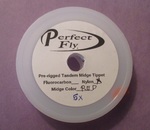
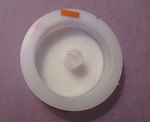
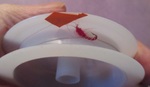
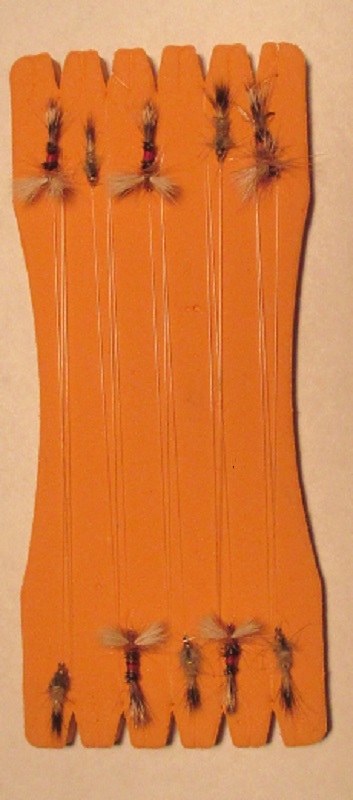
Perfect Fly “Pre-rigged Tandem Midge Larva and Pupa tippet”: Our two-fly midge setups are pre-rigged on a plastic spool at Perfect Fly and include about two and a half feet of tippet to attach to your leader. The rigs can be purchased with nylon mono tippet or fluorocarbon tippet. Size 20 flies are rigged on 5X tippet, and size 22 flies on 6X tippet. The pre-rigged tandem midges are available in cream, light green and red (blood midge) colors. They are stored on a plastic spool so that you can easily remove them and tie them onto your leader without any mess of fuss. The tag end of the tippet is marked with a small piece of plastic tape. The foam spools can be reused. Click Here For Pre-rigged Tandem Midges (Bottom of Page)
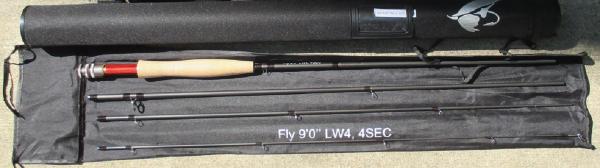
“Perfect Fly” Pro Fly Rods and Fly Rod Combination: Click Here for our (Lowest Price-Best Selling) Fly Rod and Fly Rod Series combinations. All fly rods are available in combination sets with rod, reel, and fly lines. 1.We have a new line of Perfect Fly Euro/nymph rods 2. A new Perfect Fly Power Pack Spey fly rod. 3. Perfect Fly Switch fly rods. 4. Perfect Fly SS series rods. 5. Perfect Fly Journeyman rods 6. Perfect Fly Pro series rods. 7. Perfect Fly Master series rods 8. Better Getting started fly fishing sets -rods, reels, line, leaders, leaders, tippet, accessories and flies. 9. Best Getting started fly fishing sets-same as above.
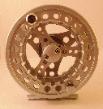
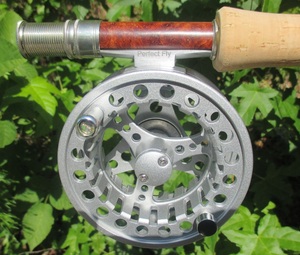
“Perfect Fly” SR Fly Reels: (Click Here)Wide arbor, smooth reeling and drag, aluminum 3 ball bearing fly reels available with extra spools. Available in 3/4, 5/6, 7/8 and 9/10 sizes.
“Perfect Fly” fly fishing DVD”Nineteen (19) instructional programs.The “Fly Fishing DVD ” video series teaches all aspects of fly-fishing from its very basics to its most advanced levels. It was conceived and designed to bring anglers a greater knowledge of the fish they pursue and the insects and other sources of food they survive on. As the introductions say, “You can get your Ph.D. in fly-fishing right here”.
Perfect Fly” Gift Cards: You can buy them online here, or call us at 800 594 4726 to order. We e-mail a card number that can be used immediately. Our gift cards never expire. Gift cards can be redeemed for merchandise online or for phone orders. Free Shipping in the Continental United States
Check out the low prices on our Perfect Fly Rod and Fly Rod/Reel/Line Outfits. They are already low priced as compared to fly shop prices because we have sales representatives and distributor middle men expenses. The weather is cooling off nation-wide and excellent conditions for fly fishing for trout and other species should again be very good. Shipping within the U.S. is Free.
“Perfect Fly” Fly Rods and Fly Rod/Reel/Line Combinations: Click Here for our (Lowest Price-Best Selling) Fly Rod and Fly Rod Series combinations “Perfect Fly” SR Fly Reels: (Click Here) Wide arbor, smooth reeling and drag, aluminum 3 ball bearing fly reels available with extra spools. Available in 3/4, 5/6, 7/8 and 9/10 sizes.
Over forty (40) Trout Fly Selections for various sections of the United States. We also have hundreds of Custom Trout Fly Selections. Call us at 800-594-4726 or send us an email (sales@perfectflystore.com) with the name of the stream or location you plan on fishing, the period of time that you will be fishing there, and we will put a fly selection together for you for that period of time and location. All fly selections are available with or without a fly box. Steelhead and Salmon Fly Selections Largemouth bass, smallmouth bass, bream, panfish, pike, muskie Fly Selections and Saltwater Fly Selections
Perfect Fly “Pre-rigged Foam Dropper Rigs” (Click Here) I doubt we have to tell you about the high popularity of dropper rigs. Most fly anglers love them, and some even consider dry dropper rigs to be a necessity when fly fishing for trout. In essence, the dry fly becomes a strike indicator that not only tells you when a trout takes the dropper fly, usually a nymph or emerger, but also catches surface-feeding trout. The biggest advantage of using a dropper rig, especially the double nymph rig, is that it doesn’t require close observation and feel to detect strikes when fishing an emerger, or nymph, without a strike indicator. Perfect Fly “Pre-rigged Tandem Midge Larva and Pupa tippet”: Our two-fly midge setups are pre-rigged on a plastic spool at Perfect Fly and include about two and a half feet of tippet to attach to your leader. The rigs can be purchased with nylon mono tippet or fluorocarbon tippet. Size 20 flies are rigged on 5X tippet, and size 22 flies on 6X tippet. The pre-rigged tandem midges are available in cream, light green and red (blood midge) colors. They are stored on a plastic spool so that you can easily remove them and tie them onto your leader without any mess of fuss. The tag end of the tippet is marked with a small piece of plastic tape. The plastic spools can be re-used.
“Perfect Fly” fly fishing DVD”Nineteen (19) instructional programs.The “Fly Fishing DVD ” video series teaches all aspects of fly-fishing from its very basics to its most advanced levels. It was conceived and designed to bring anglers a greater knowledge of the fish they pursue and the insects and other sources of food they survive on. As the introductions say, “You can get your Ph.D. in fly-fishing right here”.
Perfect Fly” Gift Cards: You can buy them online here, or call us at 800 594 4726 to order. We e-mail a card number that can be used immediately. Our gift cards never expire. Gift cards can be redeemed for merchandise online or for phone orders.
Free Shipping in the Continental United States on all products
.jpg)