Let me get to a main point you shouldn’t ever forget. Anytime and anywhere, anyone is trying to cast for trout by making a cast of over forty or fifty feet long, unless they have special circumstances that are not normal, they are using the wrong approach. Most all of the cast you make for trout should be less than thirty, feet long anywhere you are fishing. In fact, if you make cast over fifty, feet long fishing for saltwater species, you are making a mistake in most any situation you could possibly conceive.There are several reasons for this. One is very simple. The longer you cast, the less accurate you are. You cannot possible make a fifty-foot cast and land a fly on a ten foot long leader and tippet combination within six inches of your intended target without you false cast too many times. That brings up another subject of potential error- false casting – but I will discuss that later.Scenes from “A River Runs Through It” or from your favorite twenty-year old casting video looks great and tend to make you think you can’t cast, but the truth of the matter is, they have nothing to do with catching trout. Short, accurate cast that allow you to make a drag-free drift (meaning crooked, messed up cast)is what catches trout.There’s another factor that causes anglers to attempt to make the mistake of trying to cast too far. It’s caused by the fly rod manufacturers. For the last several years, up until fairly recently, far too much emphasis has been placed on making long cast. Most every fly rod ad had to do with fast action, fast tip,long casting fly rods. It always amazed me that the same manufacturers who promoted the high price, long casting fly rods, also sold an even more expensive model made of bamboo with an action so slow it was difficult to stay awake when waiting on the back cast to straighten out. I suppose anglers were supposed to be stupid enough to think that making a fast action fly rod cost a lot more than making a medium or slow action fly rod.I think the increase in saltwater fishing may have been a factor in this. Thosewho were new to fishing in saltwater were easily convinced that long cast were essential. When it came to freshwater, as with most anything else,manufacturers had to come up with a reason for you to replace your old fly rod with a new one. Recently the emphasis has been headed back to medium to slow action fly rods. In ninety-percent of the fly fishing for trout situations, a slow to medium action fly rod will outperform a fast action rod.The most recent emphasis in selling fly rods has gone back to weight. In fact,some manufacturers have gone so far in their attempts to reduce the weight that they have reduced the size of the handle to the point it only fits the hands of a petite female teenager. Anglers with big hands like me have been left out.In case you missed it, here is my point. If you are trying to make fifteen to twenty- foot curve cast that lands your fly withing a six-inch radius of a target using a fast-action fly rod, you are making it much more difficult than it should be. If you are not concentrating on doing something at least similar to this, then you need to at least recognize that you should be. That’s the type of cast you need to make to catch trout in most trout streams in the nation.
Author: James Marsh
-
Fly Fishing For Steelhead – Casting
Many fly fishermen over do the complexities involved with casting. Some want to make it more important than it really is. Many think you must learn to cast a long way to catch fish on the fly. While all of the above is true, there’s always those guys that try to fish the steelhead rivers of the Northwest Pacific and the tributaries of the Great Lakes who simply do not have the skills they need to have. Most of the time this gets down to not so much how well they can cast, but how long they are able to cast without tiring. There’s another important element to it that needs to be learned. You can waist lots of cast by not knowing where to cast. Knowing the type of water to fish is also an important part of it. Most anglers think the only application for double hauling is fishing saltwater. While this is true in some cases, there actually less requirements for a double haul in saltwater fishing applications than there are in Steelhead fishing. You should at least be able to haul. It’s better if you can double-haul. One main reason is it lessens the amount of work involved. If you get tired, you can’t cast accurately. The more false cast you have to make, the faster you will give out.It’s not always necessary to make a long cast but it is at times if you want to reach the areas of the stream you need to reach in order to increase your odd of success. If you can make seventy-five feet cast, you don’t have any problem as long as you can do that without tiring too quickly. This isn’t to say you can’t or won’t catch a steelhead with much shorter cast. You certainly can. This is only to state a goal you should try to achieve if your physically able to. If your not, you shouldn’t become discouraged. You should just learn to make the shorter cast more accurately and just as important, learn to make the different types of cast that may be required. A young man that’s perfectly able to make straight line cast up to a hundred feet and keep it up without tiring isn’t necessarily going to catch any more steelhead than on that can cast accurately but not over fifty feet.In most cases, single-handed rods that vary from a seven up to a nine weight work quite well for most Steelhead streams. Often weight forward, floating fly lines will work but it’s also true that sinking tip lines may offer an advantage at times. The multi-tip systems are popular. They allow you to use different heads on the same fly line. You can vary the depths of water your fishing without changing rigs or fly.In some cases, when your fishing large you may want to consider using a Spey rod. There are rivers and places where they have some advantage over single-hand rods. Spey casting lets you make longer cast with less effort, but only if you know how to do it. Anyone considering Spey casting should practice and perfect the method prior to going on a steelhead fishing trip. I guess you could learn if you happen to live on the stream your fishing, but otherwise, you should learn the technique before you attempt to use it on a steelhead trip. You will spook far more steelhead than you will have a chance to catch if you attempt to learn on the water.There’s some advantages many of you may not be familiar with. You can’t catch a steelhead with the fly out of the water. Spey casting will reduce the time your fly is out of the water. It will also let you mend the line much easier and better.Regardless of the fly rod you use, be prepared to make a lot of cast. As I often say, Steelhead fishing is hours and hours of making sometimes boring cast, interrupted by minutes of sheer excitement. If your not willing to pay the price, physically and mentally, you probably won’t like it. If you do succeed, you will probably be like most steelhead angles and go the rest of your life trying to explain why.
-
Fly Fishing For Winter Steelhead
Catching Winter Steelhead takes a lot of planning and patience when you get there. You must plan your trips between storms and during the right stream conditions. If your new at Winter steelhead fishing, you will need to know what your really getting into. This isn’t to try to discourage you. It’s just to make you aware of what your up against so you can plan for it.First of all, you should get read to cast for hours and that may turn into days before you hook the first steelhead. On the other hand, it’s possible to have multiple catches in one day; however, your more likely to go home fishless. Steelhead have their on schedule. You can’t change that. You have to plan your trip to coincide with their schedule. You can’t catch a Winter Steelhead if they are not any in the river where you’re fishing. You must do the necessary research to make certain your fishing the river or stream at the right time. Much of that information is available on this website. In addition, you need to pay attention to the weather forecast. Get the long range forecast if your planning on fishing for a few days. You should also get the USGS stream flow data for the river you plan on fishing. Data and associated graphs provide information on how the river is doing, whether it’s rising or falling, as well as it’s current condition speed and height in relationship to what the normal stream flow conditions are.Beware of rising water occurring during your trip. It takes time for rivers to recede back to fishable levels in most cases. It takes time for the water to clear reasonably well and all rivers differ in this respect. Some clear fast and some clear slowly.If you’re new to the river and you plan on spending a few days, it pays to learn the access points and where the best holding water is prior to your trip. Again, much of this is available under the stream section of this website. Concentrate on one river rather than trying to fish several different ones in the area. You may have to change streams due to changes in water levels, but other than that, your better off sticking with and learning to fish one river. In most cases, a few days isn’t enough time to learn a large river. changing rivers isn’t going to improve your odds unless conditions turn adverse on the stream your fishing. The grass usually isn’t any greener on the other side of the hill and the steelhead are not usually bitting better in the next stream over the hill.To be successful at catching winter Steelhead, you must be persistent. You have to be fully prepared to fight the odds. You may encounter heavy rain, snow, wind and the water is always cold.The way to handle the situation is to first, never under estimate the importance of having the right attire. Layered clothing is a must. It’s about the only way you are going to remain comfortable with the constantly changing conditions. You must have excellent rainwear, not just any waterproof designated rainwear but good rain gear that will not leak. The northwest Pacific Coast and the tributaries of the Great Lakes will put all the seams of your waterproof clothing to the ultimate test.Yes, you will have those good weather days. You may have to stay a month to encounter one though. They don’t happen very often. Everyone needs to understand the importance of being comfortable when you are fishing. It is necessary to remain alert and aware of what’s going on and to react when you do have an opportunity. It’s necessary to be patient and dedicated to the point you wiling to put up with some tough conditions.There’s plenty of good clothing you can purchase for steelhead fishing. We’re not going to get into brands and specifics but you need to have the appropriate layers of clothing, newer fleece type garments, wool socks, fingerless gloves are a must, good head wear, and other clothing that keep you warm during cold inclement, weather. Avoid any clothing that absorb and/or retains moisture.One most important thing you can’t do without is a good wading rain jacket. It has to be large enough to go over all the other layers of clothing you may wear. If you plan your Winter Steelhead fishing trip right, remain patient when there’s little to no action, and dress properly for the weather, you may learn why many Steelhead anglers think it’s the ultimate fishing experience.
-
Fly Fishing For Pacific Steelhead
According to avid Steelhead anglers, fly fishing for Steelhead is frustrating and you often go home without a single strike, but when you do hook up with one, it’s the ultimate fly fishing experience. Steelhead make hard, fast runs, stripping your fly down to the backing. They can also put on some acrobatic displays that gets any anglers heart pumping fast. Steelhead are rainbow trout but the steelhead version of the rainbow grow fast in the waters of the Pacific Ocean. They return to the coastal rivers each year to spawn as bright, chrome color fish. There’s both Summer and Fall runs of steelhead on many of the Pacific Coastal Rivers but most of the fly fishing is done during the Winter.The anglers that pursue the steelhead during the winter months, have to love the sport to endue the extreme weather conditions. They often cast all day long in freezing temperatures and very cold water waiting on that one bite. It’s hours of casting interrupted by minutes of sheer excitement – that is, if your lucky.Fly fishing techniques for steelhead came mostly from Atlantic Salmon anglers. The most common technique is to swing a fly downstream. Most steelhead strikes occur near the end of the swing. This is done both on floating fly lines and sinking tip fly lines. At times sinking fly lines are used. It depends on the fly, the river your fishing, and the time of the year. The next most popular technique is nymphing. Some anglers frown on nymphs for steelhead and refuse to use them and other prefer them. Nymphing for steelhead has developed mostly during the past few years.When you go trout fishing, most of the time you can be certain the trout are in the river your fishing. The problem gets down to fooling them into taking your fly. Contrary to that, Steelhead are not always in the river. You must time your fly fishing trips to coincide with the migration of the fish. Information on the migrations is available on this website for just about all the west coast Pacific streams in the nation. The same information is available for the steelhead of the Great Lakes tributaries.As the season transpires, schools of Steelhead, or better stated, groups of steelhead, move in and out of the rivers. Weather and stream conditions plays an important role in the migrations. Even when steelhead are in the rivers, heavy rain and snow can change things in a very short time.Those that pursue steelhead on the fly are patient anglers. If they were not patient, they would have never got to the point they call themselves steelhead anglers. Your not going to catch a steelhead every few cast. You might get one to take the fly just minutes after you have landed one or lost one, but it also may be days before the next strike comes. It may or may not have anything to do with the way you are fishing and yet the technique you’re using may well be the problem. It’s difficult to really know because of the average low numbers of fish caught. Arguments between anglers have regularly taken place on over the flies and techniques used for years and probably always will. It’s just one of the things that make steelhead fishing the sport it is.
-
Fly Fishing For Sea Run Cutthroat Trout
First of all, Sea Run Cutthroats aren’t found in every steelhead and salmon stream that flows from the Pacific Ocean into freshwater streams. They can only be found in certain streams. Those streams that do have runs of cutthroats are designated in the various articles of the stream section of this site.The Sea Run Cutthroat trout will generally come into the river after the first major salmon run. They can remain in the tidal waters for a few days, coming in and going out with the tides. As soon as they enter the rivers, they must revert to feeding on aquatic insects. The saltwater baitfish they are used to eating don’t exist in the freshwater. They slowly change their eating habits back to the insects they were raised on. In some streams, they feed almost exclusively on aquatic insects; however, in most cases, they will also feed on small minnows and baitfish.Since the Sea Run Cutts follow the salmon, fly fishing after a rain increases your chances of finding the fish. Salmon prefer the higher water, especially when the streams are low in the Fall season.If the water is very clear, dark, cloudy days are always best. It doesn’t seem to mater that much if the water is stained, but it does if it’s very clear. The low light conditions give the cutthroat trout a much better chance of hiding and attacking the baitfish. They don’t tend to follow or chase bait in open water. If the water is clear, you want to fish the shallower water under low light conditions. If it’s a bright clear day, fish the edges of the channels, pockets and deeper areas of water.Up and across presentations of the fly usually work best. You can get much closer to the cutthroat fishing in an upstream direction and make more accurate presentations than you can make fishing blinding in large areas of the stream. Down and across presentations, and swinging the fly works occasionally, but usually not as good as the up and across direction. Many anglers will disagree with this but that’s what we have found to be most productive.Most of the time a weight-forward, floating fly line is best. If you are fishing slow moving, slick water, fish near cover and structure in the water. The banks are usually better than mid-stream structure but again, that can vary with the particular stream your fishing. Small, Spey flies will also work when your fishing the larger, open water streams. Sometimes the Sea Run Cutthroats can be found in the same water you would find steelhead.Remember, the sea run cutthroats don’t stay in anyone area for a long period of time. They move around in the stream changing their locations. You should do the same thing until you find them. Fishing the same section of a stream, waiting on the trout to come to you is a poor strategy. Keep fishing different areas of the stream until you find the fish.The sea run cutthroats move around in schools. Using a boat is usually more productive than moving around to different wading areas but both methods work, and depend largely on the particular stream your fishing. Larger, bigger waters often require boats due to limited wading areas.The Sea Run Cutthroat spend time in the freshwater from the time they are born until they depart for the sea. Once they are back in the freshwater for a while, they revert back to their eating habits they relied on before. They will eat small minnows and baitfish but in most cases, the revert back to eating mayfly and stonefly nymphs and caddisfly and midge larvae. The will also take imitations of terrestrials such as hoppers, ants and beetles.
-
Fly Fishing For Salmon – Fly Presentation
We wished there was an easy solution to how to present a fly to a salmon but there isn’t. It depends on the species of salmon, area of water – saltwater, bays, or rivers, and often the river itself. There’s one thing that salmon generally don’t like and that’s the downstream wet fly swing. It doesn’t matter what fly you have on, salmon just don’t react to the flies like steelhead.Remember that salmon in rivers have been eating saltwater baitfish and are changing back to freshwater food. They differ in the way they eat depending on the water, how long they have been in the stream, and the species of salmon. Basically, salmon prefer a dead drift presentation. Chinook salmon are much like bass. They tend to lie in holding areas of deeper water and eat whatever comes by them. On the other hand, some species of salmon, such as the Coho, will feed in open water and tend to chase flies.If the salmon are in water that is still affected by the tides, this can greatly vary their feeding habits. You must keep track of the tides to know when the fish will take flies and when they won’t. In this case, the salmon are much like many other saltwater species of fish and rely on the movement of the water caused by the tides to catch their prey. Incoming tides seem to be best in most situations.Lighting conditions vary the feeding habits of the salmon. They prefer to feed during low light levels such as early morning and late afternoons. The only species that seem to feed anytime you can find them are the Pink Salmon.Fly color is a very important consideration. We think it has to do with the clarity of the water as much as anything. The time of day, and amount of available sunlight also affect this. In essence, you want the fly to be just visible enough to be seen by the salmon but not so good that it can detect the fly is a fake. The color of the fly affects the visibility of it.The best type of fly line to use depends on the depth of the water your fishing and the fly. Floating fly lines work fine in shallow pools but if the water is much deeper than six feet, we prefer to use a sinking tip fly line.You want to vary the retrieve of the fly. As a general rule, erratic presentations work better than steady presentations. Keep the speed of the fly slow as possible. Salmon are not steelhead and if you present the fly at too fast a speed, most of the time they will reject it.Always vary the retrieve, change the strips and pauses and continue to try various things. Keep in mind that the fly needs to remain in the strike zone, meaning the area or depth you think the salmon are holding, and use a presentation that keeps the fly in that zone of water but keep changing the way it is presented until you get some results.
-
Fly Fishing For Atlantic Salmon – Their Life
The Atlantic Salmon (salmo salar) means “salmon the leaper”. They are anadromous fish. That simply means they migrate up freshwater rivers from the sea to spawn. The salmon spawn in the Fall in the same rivers they were born in. It’s usually late October or November when the actually spawning takes place. After they enter the rivers to spawn, they don’t eat. Their body chemistry is such that they deteriorate to aid in the egg and sperm production.The typical Atlantic Salmon averages between 5 to 20 pounds but they can get much larger. Atlantic Salmon enter the rivers anywhere as early as April and as late as November. Those that enter early are called Summer run salmon and those that enter the rivers late in the year are called Fall run salmon. Most of them probably enter the rivers in May and June. A big factor in the timing is the water level of the river. Generally, they enter the rivers to spawn after the water levels rise.Prior to the spawn, the male matures sexually and develops a elongated head and Kype on his lower jaw. The female digs out a redd that’s about six inches to a foot deep in loose gravel. She does this by fanning her tail. The male fertilizes the eggs with milt. When the eggs hatch into little Atlantic Salmon the following Spring, they are first called alevin. After about a month after these tiny salmon get through the gravel they begin to feed. These little salmon are usually just called fry or fingerlings. About a year after the hatch, the fingerlings change to what’s called parr and have distinctive marks on their sides. The parr are about 7 or 8 inches long.The Atlantic Salmon remain in the freshwater rivers usually from two to four years. The small parr salmon undergo another name change and are called smolt. They loose the marks along their sides and become a silver color. Their bodies begin to adapt to the saltwater environment and the smolt migrate out of the freshwater rivers into the sea. This seaward migration usually occurs during the months of May and June.Most of these salmon, from both coast of the Atlantic Ocean, migrate to the waters off Greenland although some go to other coastal areas. The mostly eat squid, prawn, and caplin and gain weight relatively fast. They may stay in the saltwater for as long as three years and as short as a year but they eventually migrate back to the same river they were born to spawn. Almost unbelievably, this can take them over 2500 miles of open seas. The fish that return to the rivers within a year are usually about two to five pounds and are usually males. These salmon are called grilse. Those that stay at sea for two or more years are called salmon. They usually weight between eight and thirty-five pounds. You will find that some rivers have both grilse and salmon that return and others have only one or the other – grilse or salmon.Most everyone knows that salmon die after spawning but not all know that Atlantic Salmon usually live after the first spawn. Some go back out to sea just as soon as they finish spawning and others stay in the river through the Winter. These salmon are called kelts and sometimes, black salmon. It is thought that these fish do not eat the entire time they are in the river, which can be up to a few months. They return to sea, get well and return to the rivers to spawn again. They can spawn as many as three or four times.
-
Fly Fishing For Atlantic Salmon – Their Life
The Atlantic Salmon (salmo salar) means “salmon the leaper”. They are anadromous fish. That simply means they migrate up freshwater rivers from the sea to spawn. The salmon spawn in the Fall in the same rivers they were born in. It’s usually late October or November when the actually spawning takes place. After they enter the rivers to spawn, they don’t eat. Their body chemistry is such that they deteriorate to aid in the egg and sperm production.The typical Atlantic Salmon averages between 5 to 20 pounds but they can get much larger. Atlantic Salmon enter the rivers anywhere as early as April and as late as November. Those that enter early are called Summer run salmon and those that enter the rivers late in the year are called Fall run salmon. Most of them probably enter the rivers in May and June. A big factor in the timing is the water level of the river. Generally, they enter the rivers to spawn after the water levels rise.Prior to the spawn, the male matures sexually and develops a elongated head and Kype on his lower jaw. The female digs out a redd that’s about six inches to a foot deep in loose gravel. She does this by fanning her tail. The male fertilizes the eggs with milt. When the eggs hatch into little Atlantic Salmon the following Spring, they are first called alevin. After about a month after these tiny salmon get through the gravel they begin to feed. These little salmon are usually just called fry or fingerlings. About a year after the hatch, the fingerlings change to what’s called parr and have distinctive marks on their sides. The parr are about 7 or 8 inches long. The Atlantic Salmon remain in the freshwater rivers usually from two to four years. The small parr salmon undergo another name change and are called smolt. They loose the marks along their sides and become a silver color. Their bodies begin to adapt to the saltwater environment and the smolt migrate out of the freshwater rivers into the sea. This seaward migration usually occurs during the months of May and June.Most of these salmon, from both coast of the Atlantic Ocean, migrate to the waters off Greenland although some go to other coastal areas. The mostly eat squid, prawn, and caplin and gain weight relatively fast. They may stay in the saltwater for as long as three years and as short as a year but they eventually migrate back to the same river they were born to spawn. Almost unbelievably, this can take them over 2500 miles of open seas. The fish that return to the rivers within a year are usually about two to five pounds and are usually males. These salmon are called grilse. Those that stay at sea for two or more years are called salmon. They usually weight between eight and thirty-five pounds. You will find that some rivers have both grilse and salmon that return and others have only one or the other – grilse or salmon.Most everyone knows that salmon die after spawning but not all know that Atlantic Salmonusually live after the first spawn. Some go back out to sea just as soon as they finish spawning and others stay in the river through the Winter. These salmon are called kelts and sometimes, black salmon. It is thought that these fish do not eat the entire time they are in the river, which can be up to a few months. They return to sea, get well and return to the rivers to spawn again. They can spawn as many as three or four times.
-
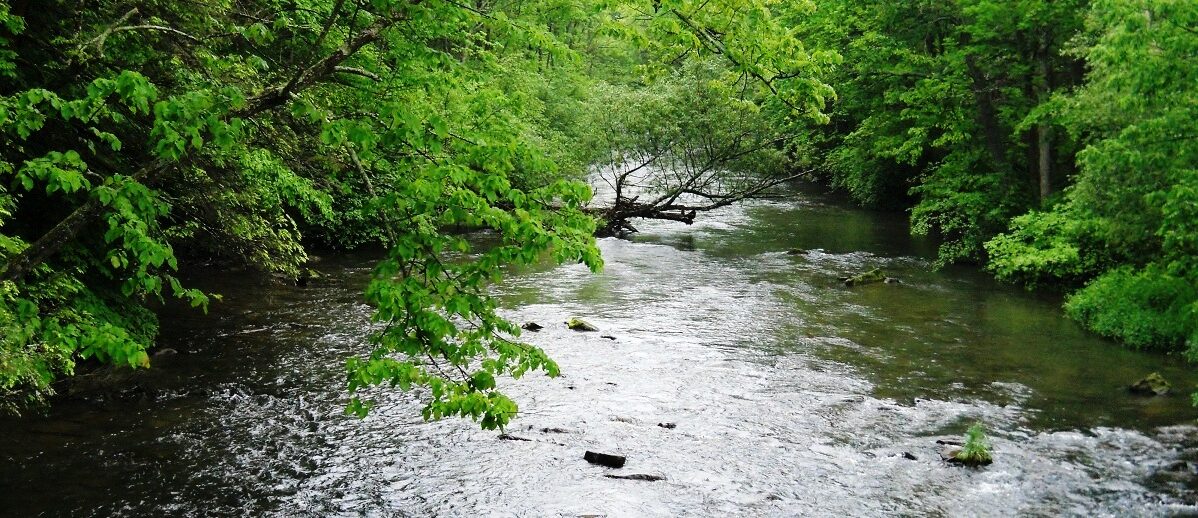
Featured Streams – Eastern Prong of Little River in Great Smoky Mountains National Park
From the Exit of the park to Metcalf Bottoms
Fly Fishing The East Prong Of Little River (Exit from the Park to Metcalf Bottoms)The East Prong of the Little River is commonly referred to as “Little River”. It’s one of the largest streams in the Great Smoky Mountains National park. It’s by far the most fished stream in the park. There are two reasons for this. One is easy to guess. It’s one of the best streams in the park. The other is also pretty obvious to those that have fished there before. Much of the stream is the most accessible water in the park. A paved road follows it all the way from its exit from the part to past the Elkmont Campground.Brown and rainbow trout are present in the lower, middle and upper sections of thestream and brook trout can be found in its uppermost part. Little River has some of the best brown trout fishing in the park and due to its size, it has some of the largest brown trout in the park. By lower part, I am referring to the section this article covers. I’m calling the middle section the part from Metcalf Bottoms to Elkmont Campground and the upper section, the part above Elkmont Campground including its tributaries.Fishing Little River ranges from easy to difficult depending on when and where you are fishing it. Most of the stream is fairly easy to negotiate. Some of it isn’t. Some of it is tightly enclosed with trees and overhanging tree limbs and other parts are two deep to wade.Little River is the most popular fly-fishing destination in the Great Smoky Mountain National Park for even more than the two reasons I stated above. It’s also convenient to some larger metro areas such as Maryville, Pigeon Forge, Gatlinburg, and Knoxville. It can easily be accessed from the Townsend area, Wears Valley (the closest), and Gatlinburg.The main part of Little River runs from what is called the “Y” downstream to the park boundary at Townsend. The stream is rather wide in this area and frequented mostly by tourist on float tubes or swimming and playing in the water during the warm months. The only trout present would be the ones stocked by the state of Tennessee that swam upstream from just outside the park in Townsend. In the summer, the water stays too warm for wild trout and the stocked trout too for that matter. Smallmouth bass exist in most of the entire lower section of the stream. There’s only a short section of the main river (after the confluence of the water from the Middle and West Prongs) that’s within the park’s boundaries.Trout found in the lower part of this section of Little River are usually difficult to catch during the warmer times of the year because the warm water temperatures can deplete the oxygen content of the water to a level below that needed by trout. They begin to exist farther upstream at a point that’s far below that generally thought by most anglers. The browns are present much farther downstream than the rainbows. Even so, much of the lower section becomes too warm during the hot summer. The trout that do remain there, become lethargic and difficult to catch. Even if you could, it’s very unhealthy for the trout which can die due to over exertion in the oxygen depleted water. The section below the confluence of Meggs Creek at Meggs Falls, is generally too warm to fish during the hot summer, except the upper part near Meggs Falls and then only during the early mornings and late afternoons. This part of Little River is best fished during the cooler seasons. This section of the river, especially the upper parts near Meggs Creek, does have some trout and some very large brown trout at that. There are lots of deep pools, too deep to wade in many places. It also has some very rough and difficult to wade water. The banks are generally very high and steep and it is easy to slip off the rocks if you are not very careful, especially when you are wearing wet wading boots. One area called the Little River Gorge, can even be a little dangerous to fish at times. If the water is high, you should be very careful or just avoid wading it altogether.This area is fished by two kinds of anglers. The ones that don’t know what they are doing and are not aware it can be too warm to fish there, and those that know exactly what they are doing and are pursuing large brown trout. These anglers are mostly locals that are very familiar with the stream and the trout in that area.From Meigs Creek upstream past a low to medium gradient area known as“Metcalf Bottoms”, it’s still possible for the water to get above seventy degreesduring the hottest parts of the summer. Most of the time it isn’t too warm and the fishing can be good for both rainbows and browns. If the water is above 65 or 66 degrees F, my suggestion would be to move upstream of Metcalf Bottoms.Water temperatures above the waterfall at an area known locally as the “Sinks”, are agreeable to the trout most of the time. The portion of the stream from the “Sinks” upstream to “Metcalf Bottoms” usually holds far more trout than it is thought to hold by most anglers.The stream gradient is rather low through Metcalf Bottoms and you will find some longer than normal riffles and runs and some longer, shallower pools. The area around the Metcalf Picnic area is usually busy, and at times, even crowded. Fishing can be very good there provided the water hasn’t been disturbed. I should also mention that due to the lower gradient and softer bottom in some areas, this section of the stream has some crawler nymph mayflies and net spinning caddisflies that are not that plentiful in many other areas of Little River. The smoother flows can also demand some difference in the normal pocket water presentations.One tributary stream in the lower section of Little River that’s of importance to anglers is Meggs Creek. This little stream has some brook trout in its upper headwaters. You can access it from the Meggs Creek trailhead located near the Sinks. You have to do some hiking to get to the best water. Its confluence with Little River is easy to find. Meggs Creek Falls are visible from the Little River road.Don’t completely rule out this section of the Little River. It does have its good times. Both species of trout can be caught in the upper part of this section above Meggs Creek at certain times of the year and in the Metcalf Bottom area most of the time. There’s a lot of water (several miles) between Little River’s exit at Townsend and the Meggs Creek area. The closest and by far the fastest way to get to the area of Little River between Meggs Creek and Metcalf Bottoms is through the entrance to the park from Wears Valley.Don’t forget one very important thing. Brown trout can tolerate warmer (lower dissolved oxygen content) water than rainbows. In any stream where both species exit in areas where the water temperature starts to become marginal for trout, you will always find that the brown trout exist farther downstream in warmer water than the rainbows. The upper area of Little River, even some areas below the sinks, hold some very large brown trout. Now don’t go running there to make a few cast expecting to catch one. They want pounce on every fly you toss at them. They didn’t get big being stupid.
From Metcalf Bottoms To Elkmont: The middle section of the East Prong of the Little River from Metcalf Bottoms to Elkmont is a prime part of the best Little River has to offer. It contains a variety of water but most of it is fast pocket water. There are some long, deep pools; some long riffles and a few long, deep runs but it is mostly pocket water. All in all, it is a very beautiful stretch of water that looks like it has a trout in every square yard of it and it isn’t all that far from being true. Some sections are difficult to wade but you can manage to get around in it just fine most everywhere.Just above Metcalf Bottoms the stream’s gradient increases and becomes typical of what occurs for the next few miles upstream. There are sections ideal for dry fly fishing and others perfect for high stickin with nymphs. There are areas where the trees make it a little tough and you have to watch your backcast and others where it is fairly clear of obstructions. There is one thing it isn’t short on and that’s boulders and rocks. My guess is this section holds about as many trout per mile as any section of water in the park, although I don’t know that for a fact. I do know it has plenty of them and a good mixture of browns and rainbows although it’s mostly rainbows. The very large browns in this section make up for any numbers of browns in all respects. If there were many of the huge ones, there wouldn’t be a living creature in the stream. It has about all a stream of its size is able to sustain.Just about all of the stream is visible from the road that follows closely along it. There are many pull offs along the road to park and some designated parking lots. Some areas have very steep banks and ledges to crawl down and in some places you can easily walk down to the water. You are tempted to try to spot trout from every high point of observation and if you are not very careful, you will do more damage than good. A little movement or motion on high points above the stream gets the trout’s attention very quickly. Unless you learn what to look for, you probably want see them when they are right before your eyes.There is a major problem with this section at times. You may run into tubers and kayaks along the way and if you are not careful, you may find yourself fishing right behind someone. It can get crowded at the so called “peak fishing” times. In April and May the Little River usually has about all the anglers it can support in this section. It isn’t a secrete that it holds lots of trout. The only thing I think is comical about it is that often during other times of the year, such as the month of October and November, I have caught just as many trout as I have caught any other time. I have even caught them on cold winter days when no one else was fishing. I have caught them every month of the year on a dry fly. There are few places in the United States where that can be done.From Metcalf Bottoms upstream to Long Arm Bridge, the stream will change from flowing fairly smoothly to fast, turbulent rapids along with everything in between these two extremes. During the warmer months of the year, you can count on a lot of recreational activity in this section of the river. During those times, you may consider fishing very early or late in the day. After all, that’s not a bad strategy to utilize during the summertime for other reasons. From the Long Arm Bridge to the Elkmont Campground you will find some of the best water that exist in Little River. It certainly isn’t a secret. It is fished as heavily orheavier than any section of water in the park but it’s for very good reasons -primarily easy access and lots of trout. Some of this area contains the classic pool,riffle, run stream makeup that allows the trout the opportunity to select prime liesthroughout the changing seasons. You may occasionally become frustrated withtubers in this area, but much less frequent than downstream. Most likely it will be other anglers that frustrate you. We just avoid it when it is crowded, or even close to being crowded, and fish other places in the park. Most of the time we fish Little River, few others are fishing. Often we are the only ones in a few miles of the river. We prefer to fish it when the fishing is considered “quote”, bad or not good. We seem to always catch plenty of trout. What’s almost comical about the quote “good and bad” fishing days is that often anglers catch very few trout on the “good” days. You will see this happen often in April and May, two of the quote “best” months of the year. There will never be any shortage of excuses though. There’s always plenty of things anglers can blame.My advice is to completely ignore what others have to say about their success, or lack of success, and go whenever you can go. I’ll put it this way. If the water in this area of Little River isn’t completely out of its banks and it’s above freezing air temperatures, you should be able to catch trout. You probably won’t be able to do it fishing the same Jake’s bead-head fly or green weenie you may normally fish when anyone that can cast can catch trout. Jake (a name I just threw in, not any particular person) may be the one that’s the bead head. You may not be able to fish the same Purple Trude or whatever it is you were told was the “hot fly”. Most likely you may not be able to fish the same fast water you fish 100% of the time and do well. Don’t you think it would probably help to know something about what your trying to imitate, where the trout are holding, and a few things many anglers don’t have a clue about? If you focus on what is going on in the water and not on what anyone else has to say about the fishing, you will eventually start catching trout most every time you go. The trout don’t pay any attention to what anyone has to say and neither should you. They aren’t going to starve in spite of what Joe Blow has to say about it. They feed every day and as long as they feed you can catch them.I’m not about to try to count the times we have fished this section of the Little River during the last ten years. Our video logs are full of trips to this area. Some of our best days in the park have been on this section of Little River as well as the section above Elkmont that hasn’t yet been posted. We have had a few tough days on this section of Little River, but only a very few and they really were not all that bad. At times, we enjoy fishing on the worst possible days just to prove to ourselves that we can catch trout under adverse conditions. It’s amazing what you can catch when you simply make the effort. I get very frustrated when I have a difficult time catching trout. It just drives me that much harder towards trying to succeed. To me, that’s one of the most enjoyable aspects of fly fishing for trout or any type of fishing for that matter. Overcoming the difficulties, or maybe you could call it outsmarting the trout, is the thing that should give you the greatest amount of pleasure. I don’t like the later phase very much because when you think about the fact their brain is about the size of a pea, it doesn’t make you feel very successful to say you outsmarted them. Anyway, just being able to catch trout when it’s easy to do so, doesn’t quite cut it for me.Most of the time when anglers have a tough day of fishing, it’s because they are set in their ways of fishing, using the same flies, the same methods of presentation, and doing the same basic things over and over. They may change from a dry fly to a nymph or vise versa, and change flies several times, but that’s about the extent of their versatility. The traditional methods of presentation and the generic and attractor flies work okay when conditions are favorable but not otherwise. It’s easy to summarize most of the problem. When the trout are feeding anywhere other than the fast water where they are easily to fool, most anglers can’t catch them. They think the fishing is lousy and pass it off as if it has nothing to do with their fishing skills or their knowledge about the trout and the food the trout survive on.There are many very productive hatches and just as important, periods of time leading into a hatch, that are completely ignored by most anglers. Actually it isn’t so much that they are ignored as it is they are passed over by anglers not familiar with the stream’s aquatic insects. Some of the insects are never mentioned mainly because little to nothing is known about them. There are many days anglers are complaining about lousy fishing conditions when there really isn’t a good excuse for not catching trout. I rambled off the main subject, but that’s what was on my mind.This section of Little River has several tributary streams. Laurel Creek is a very small tributary stream that has some small rainbows and brook trout in its upper reaches. It passes under both Little River Road and Elkmont Campground Road near the turn to Elkmont. It’s so enclosed by rhodendrum bushes that it’s hardly noticeable.Jakes Creek is a very small but a very good little tributary stream that comes into the Little River in the Elkmont Campground. Small rainbows make up the bulk of its trout but it also has some brown trout. The size of some of the brown trout may fool you. High water in the Little River would be about the only justifiable reason to fish either of these two little tributary streams considering the fact you have to pass miles of Little River to get there. They also provide some seclusion from other anglers.In a recent article on Hazel Creek, I made the statement that I didn’t think any stream in the park was any better than Hazel Creek and I will make the same statement about this segment of Little River as well as the segment above Elkmont I haven’t posted that’s coming up in a couple of days. Simply put, “the streams in the park don’t get any better than these two sections of the Little River”.
Elkmont to the Headwaters: The East Prong of Little River from Elkmont to its headwaters is another very good section of water that’s as good as any in Great Smoky Mountains National Park. Most anglers want to travel upstream a good ways to get away from everyone and there is certainly nothing wrong with that but you certainly do not have to in order to catch plenty of trout. Just upstream of the campground at the Bridge over Little River at the Little River Trailhead you will find some excellent water. For some reason (I think it’s because it appears to be to easy to access to be any good) anglers don’t tend to fish the first half mile or so of the area above the bridge. Angie and I have fished this area many times when there was not anyone fishing the area yet the parking area was full of vehicle that obviously belonged to anglers. Most hikers and tourist don’t have their vehicles covered with fishing decals and logos.It’s one of Angie’s favorites spots on Little River and for good reasons. She always catches several nice trout before we get from the bridge to the first old house on the stream bank headed upstream. The large pool near end of that stretch always produces for her. I video taped her catching five trout out of that one pool one cold December day and three of them were good size brown trout. Yes, I did say out of the pool, not the fast water. There have been plenty of days we have caught a lot of trout (it would surprise you if I listed the numbers) within the first mile or so upstream from the bridge.You may think I am revealing a hot spot, but trust me, it’s no better than the next few miles of the stream. All I am saying is that we usually don’t strike out on a long hike upstream because we don’t have to. I should also say we have watched several other anglers fish that area and most of the time, not even cast in the pool I’m referring to. We have yet to see anyone catch the first trout out of it even though i have seen Angie catch several dozen out of it over the last few years. She refuses to let me fish it. I usually start fishing just past there and catch plenty of trout heading on upstream. We have walked two or three miles before we have started to fish and it seems to not make any difference. The entire upper millage of Little River is just a good stretch of water obviously with a high population of trout although I have no way of really knowing if it actually has more than other areas of Little River or not. I haven’t seen any shock test results from the park and fishing only allows you to speculate on the population.The trail, which is an old road, is easy to hike. Its gradient is continuously, slightly uphill and not steep at all. For some reason, the size of Little River changes very little as you go upstream. It stays near the same size for a long way. Something else noticeable is that the brown trout continue to appear as if there were not any change in the upstream population of trout.There are numerous tiny branches that feed into Little River as you head up stream. The first one of any size is Huskey Branch and it’s very small. The first major tributary stream you will reach is Fish Camp Prong. Its a major tributary of the Little River with several tributaries of its own. It’s located about four miles upstream from the Little River Trailhead. That would be a tough one day trip for many anglers and for that reason, most anglers prefer to stay at one of the campsites on the upper Little River to fish it. Of course, I know some younger guys that hike there to fish on a one day trip as if that wasn’t a problem at all.The trout in Fish Camp Prong are mostly rainbows with a few browns in the lower sections. Brook trout begin to show up farther upstream. It has lots of small branches that flow into it. The larger tributaries of Fish Camp Prong are Ash Camp Branch, Buckeye Gap Prong, Silers Creek, and Goshen Prong. Goshen Prong trail follows Fish Camp Prong from its confluence with Little River for about three miles and then upstream on Goshen Prong itself. These streams in the upper end and headwaters of Fish Camp Prong all have populations of brook trout.Not far upstream above Fish Camp Prong on the main stem of Little River is Rough Creek. Rough Creek Trail follows it for about two miles. Farther upstream on the main stem you will find Meigs Post Prong and Grouse Creek. There are several tiny prongs all the way up to near the Appalachian Trail near Clingmans Dome that feed these uppermost creeks. Most of these little streams above and including Meigs Post Prong hold brook trout.Campsite #24 is probably the most popular campsite for anglers. It’s located just below the Rough Creek confluence. Campsite #23 is about another three miles upstream on Goshen Prong Trail from the confluence of Fish Camp Prong and the main stem of LIttle River. This one is also a popular site for anglers. You can also reach it on the Goshen Prong Trail from the Clingmans Dome Road. It is shown to be 4.4 miles from the road to the campsite. If I used this approach, I think I may want to just head on downstream from #23 to Elkmont and leave my vehicle at the trailhead to pick up later. I’m only kidding but it is a steep decline according to the elevation profile on my GPS. There’s also a remote site #30 near the end of the main prong of Little River. It must be accessed from downstream.I opened this article with the statement that this section of Little River and the section from Metcalf Bottoms up to Elkmont Campground is as good as any section of stream in the park. Remember, I didn’t say better than any – I said as good as.It isn’t the stream that’s going to make a substantial difference in what you catch in quantity or quality. It’s your fishing skills but even more important, its your understanding the trout, their habitat, behavior, and the food they eat.I received so much email from comments I made in yesterday’s article along the lines of fishing success, I will elaborate some more on the subject. The streams in the park are all small, fast pocket water streams. Catching fish when conditions are great usually isn’t that much of a problem for anyone that can cast twenty feet and follows a few basic procedures – staying hidden, getting a good drift, etc. Its all the other times when fishing isn’t that easy – the two months of very hot summer weather, the two to three months of cold weather, the hundred days of low water, the few days of high water, and the many days it’s raining, snowing, the wind is blowing, it’s storming, someone’s fishing in front of you, tube floaters are running over you, etc, etc. In other words, seventy-five percent or more of the time. It’s during those times, which is the majority of the days anglers could fish that most anglers have a difficult time catching very many trout. It’s easy and self satisfying to just pretend it’s the “poor” fishing conditions that’s the problem. Some anglers are completely satisfied on waiting on conditions to change to where its easy to catch trout. Many are not even aware that it’s really their way of fishing and not the fishing conditions that’s the problem. They think they are doing everything right and its because the fish are not feeding. They think that’s just a part of fishing and for them, it is.There isn’t anything wrong with going fishing only when it’s very easy to catch trout. It should be fun first and foremost. But for those anglers that realize lack of success usually isn’t because the fish won’t eat, it’s their knowledge and skills that’s lacking, such a causal approach isn’t good enough. Many anglers enjoy getting out in the outdoors whenever they can and they want to be able to catch trout wherever and whenever they go. Some anglers take their fishing rather seriously and some don’t. Some are satisfied with mediocre results and some aren’t.I’ve always been the type that wanted to keep improving and keep learning more and more about the sport, never being completely satisfied with everything. It’s successfully meeting the challenge of being able to consistently catch fish that gives me the most satisfaction. It’s competition but not with other anglers. It’s competition with the fish and the elements Mother Nature hands us.Most of what I write about is oriented towards helping someone become a better angler. I learned many years ago that being consistently successful required learning a lot about the fish and the food they eat, irrespective of the species of fish you were after. I know for certain that if I had not of used that approach, I wouldn’t have been able to learn a living for the last thirty years from TV shows, instructional videos on fishing and a few other closely related outdoor activities such as boating.One reason I mention this is because I often fail to put the fun and enjoyment element into what I write about fishing. That’s not only because I take it seriously. It’s also because I am not a very good writer, especially when it comes to adding the entertainment aspects of it. Well, on second thought, maybe some of you get a kick out of seeing how I can abuse the English language.
-
Basics of Fly Fishing for Smallmouth Bass
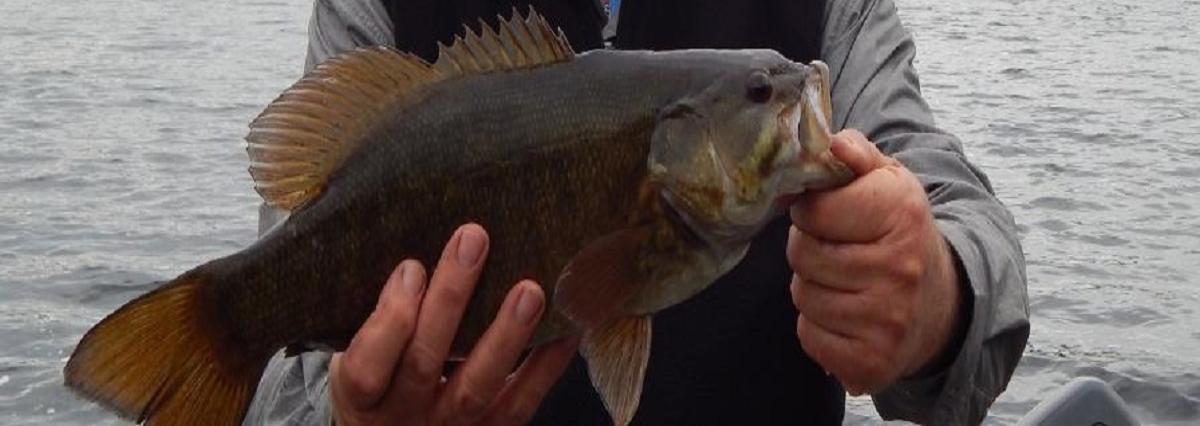
Smallmouth bass,(micropterus dolomieui) are members of the sunfish family. Their original native range was basically in the Mississippi River and Ohio River basins including the great lakes. They exist in the Tennessee River system as far south as Alabama. Originally, they were not found west of about the center of the United States. They have been stocked by various parties and means since the advent of the railroad and in most all cases, reproduce on their own. Now, they are found throughout the west, mid-western and eastern United States in all but three states.Males are generally smaller than the females, with grown males averaging about two pounds, and females about three to six pounds. Like most all fish, the smallmouth bass growth rate is determined by the amount of food present in their habitat, and the average water temperature. The average water temperature is a factor in determining the growing season of the smallmouth bass as well as its food.The color of the smallmouth bass can vary from lake to stream, stream to stream and lake to lake. They usually have a dark brown back. The sides of the fish is usually a bronze to brown color. They have the nickname “bronze backs”. Some anglers call them brownies. In some water you will find they are tinted green. Their stomachs are a light yellow to white color. The more you know about smallmouth bass and the food they rely on for their survival, the easier it is for you to catch them. The Smallmouth Bass is a predator. They feed mostly on minnows, baitfish, crustaceans, aquatic and terrestrial insects. Where crayfish are abundant, they usually comprise over two-thirds of smallmouth’s food.Although Smallmouth bass do school at times in certain types of water, they generally don’t cruise around looking for food. They are predators that like to hide and attack their prey. The wait for their prey to come to them and then attack the prey with a short, sudden burst of speed. When they are schooling, they are usually working together to push schools of baitfish up to the surface where they panic and become easy to catch prey.Two things to always look for when your fly fishing for smallmouth is food and cover. For example, if smallmouth bass exist in a lake or stream, rest assured that anywhere you find both rocks and crayfish, you will usually find smallmouth. You often have to determine the depth of water the fish are likely feeding in. This changes with the seasons, water clarity, and available light.Smallmouth bass found in rivers have to deal with current. Those found in lakes, generally don’t have to deal with much current and in some cases, practically none. As a general rule, river smallmouth have to consume more food than those found in lakes. They spend a lot more energy swimming in current and they have to replenish it by taking in more food than bass in still waters. River bass are almost always stronger than lake smallmouth. You will find that they have a different habitat from lake bass because they hold in areas that break the flow of current. They tend to relate closer to structure. They tend to hold in the slack water out of the current and ambush prey that has to deal with the current. Lake smallmouth bass also hide and attack their prey from cover, but current doesn’t play a role in it. There is an exception to that and it is that in man made lakes and reservoirs, discharges from dams can creates current in the lake and/or reservoir. In those cases, the smallmouth may position themselves in slack water, out of the current where they conserve energy and attack their prey. .In most lakes and streams, the easiest time to catch smallmouth on the fly is during the pre-spawn season. The fish are usually hungry and holding nearby the shallow water they will spawn in. Like most other fish, the spawning habits of smallmouth bass greatly depends on the temperature of the water. The males begin building beds when the water averages and remains for a day or two at about 55°F. The females bass will move to the beds shortly after it is finished. The actual spawning process will take place at water temperatures ranging from 60° to 65°F. The females usually deposit about 7000 eggs per pound of body weight. During this time, the male releases milt in the bed.
The most fun you can fly fishing for smallmouth bass is catching them when they are feeding on the surface. Nothing beats the fun and excitement of seeing a five, pound smallmouth come up from the bottom of a clear water stream and crash an imitation of a frog on the surface. It is often easy to attempt to set the hook before the fish actually has the fly in its mouth. The problem is, day in and day out in the typical smallmouth lake or stream, they are not feeding on the surface. Far more often than not, they are feeding beneath the surface and often near the bottom. Unless you just want to be a part time smallmouth angler, you better learn to fish to fish you can’t see as well as those that feed on top.Finding Smallmouth In Small Streams and Creeks:There are two types small streams and creeks. There are those large enough to float and those that are too small to float or restricted by regulations that do not allow boats. The techniques required to fish from a boat, small aluminum boat, pontoon boat, drift boat, kayak or other type vessel are quite different from those used wading. Many streams that hold smallmouth bass are just to small to float. You have to wade or fish from the banks to fish them. Fly fishing for smallmouth from the banks of a stream, usually limits what you can do.Wading Small Creeks and Streams:When wading, you have to be use stealthy approach. Keep in mind, in water clear enough for you to see the fish, the fish can also see you. You also have to wade quietly, not kicking or moving rocks and gravel around on the bottom of the stream. The bass can also hear you, or detect subtle vibrations in the water. Ripples you create when wading can also spook the bass.Any small stream that supports a good population of smallmouth bass will have some deeper holes or pools. A big smallmouth can be found in a small hole or pool, but those that are rather large, usually hold the larger size smallmouth. There should be some holes that are seven to twelve feet deep. This is necessary for the smallmouth during the hot summers and cold winters. During the spring and fall months, they are usually found much shallower. These are not hard rules, just general ones, so be aware this varies with water temperature, clarity and amount of light. In some cases it is possible to sight fish to smallmouth. This is not only effective at times, it is a very exciting way to fly fish for them.If you slip up to a pool and the water in front of you is fairly deep with good structure, but you fail to see any smallmouth, give it a little time. The fish can be hiding under something or just out of sight and you won’t be able to see them until they move. They can be spotted moving much easier than they can when they are not moving.Keep in mind that water with large rocks and boulders, or downed trees or deadfalls, create breaks in the current and provide hiding places for smallmouth bass. Areas of wide open water with little to no structure isn’t near as likely to hold very many fish. That written, in such cases, keep in mind that the only structure in such an area usually hold the only fish there, so don’t overlook that.A point to keep in mind, is during the warmer months of the year, smallmouth relate to the current and will never be far from it. You should position yourself downstream of boulders and eddies, and cast upstream, allowing the fly to drift drag free to you. As a general rule, smallmouth bass will be positioned behind the rocks and boulders on the downstream side. This isn’t always the case. They can be positioned in from of larger rocks and boulders in swift current because there is usually a relatively small dead area of almost still water.Fishing Small Creek and Streams From A Boat:Most small streams can be waded, but many don’t have the proper access points to wade from the banks. Others are too deep to wade and require some type of a boat or a float tube to fish. Float tubes are handy for those that don’t mind floating around half submerged in the water. Some streams move to fast to fish from a float tube. The water in the stream need to be very slow moving for their use, or otherwise, you can get into trouble fast.As far as the use of boats, often the one or two man type pontoon boats are most practical They are easier than most boats to tow, load, unload and launch. Other small streams fish well from small aluminum or fiberglass john and/or v-hull power boats. In many small streams, the best vessel is a canoe. It all depends on the particular water and the number of people you need to accommodate. Some streams prohibit the use of gasoline powered boats and require electric motors or paddles.In each situation, you have to take into consideration where you can access and exit the stream and how long it takes to get from one point to another. You have to know the stream well, or make absolutely certain there are no points you will encounter where to water too fast to handle, the water to low to navigate, or numerous other obstructions or dangerous situations you could possible encounter. Knowing these types of things is critically important in some cases, because you can become stranded in a stream after dark if your not careful. In other situations, you can reach your take out point much earlier than you want to, limiting your time to fish. Even worse, you can find yourself in a dangerous situation due to conditions and circumstances you were not aware of. Each stream much be carefully analyzed for any possible problems, not to mention the practical problems of catching fish.Finding Smallmouth In Lakes and Large Rivers:In clear lakes and large, clear rivers, smallmouth will travel great distances to take a fly during the middle of a sunny afternoon. If you can see the bottom of the stream or lake, chances are they can see your fly very well. In fact, they can see extremely well in clear water. The first and foremost way to fool them into taking your fly is to make sure your they look as realistic as possible. You have to try to take advantage of the fact they can see them well. You need to disguise your flies by matching them to the size, color and shape of the local forage. You can also use erratic movements to fool them, or in other words, keep the fly moving such they don’t get too good of a look at it.Sky conditions and water clarity affect how well the smallmouth see your fly. If your fishing the fly on or near the surface, wind can also affect how well they can see it. During the middle of the day in water less than ten feet deep, you can often fool the bass by imparting short twitches with the rod to make the fly dart from side to side. You can allow the fly to sink to different depths and begin the twitching action and rhythm. Often, the smallmouth will crush the fly and other times they tend to just follow it as if they are just curious about it. When this happens, it often works to just let the fly sink deeper and then resume the twitching rhythm. Often the key is finding the bait. You can sometimes see the bait but it not, a fishfinder, or sonar device can find it. When you spot globs of baitfish holding over structure, you will often find smallmouth feeding on them. In this case, it is usually best to mark the spot with a buoy, back off and return to drop a streamer in the area of the baitfish. This works well if the bait is staying in the same area, but often they are on the move, not holding in one area over structure. When they are on the move, smallmouth feeding on them will follow them. In this situation, you can’t just go back to where you caught them the day before and count on catching them. You usually have to relocate them on your fishfinder. If the smallmouth are not feeding on or near the surface,on the banks of the lake, and you don’t find the baitfish, your probably just waisting your time casting.You don’t have to use a fishfinder to catch smallmouth. Many anglers prefer to do it visually. The most obvious locations in lakes that are clear are rock shoals and drop off points. As mentioned in our other articles, smallmouth bass are predators that rely on hiding and attaching their prey, as well as chasing it down in open water. The fish usually relate to some type of object or structure such as a rock, log or weeds. They can also be found in schools. When they do congregate in schools, you will usually find the smallmouth bass are near the same size.Most lakes and large rivers require some type of boat to fish. Some are suited well for tube floats and others are too dangerous to fish from a float tube. Boats can range from a large variety and types ranging from motor boats of many different types; small boats with electric trolling motors; pontoon type vessels ranging from the one-man type to larger pontoon boats; drift boats; and kayaks,There are some lakes and large rivers that have areas of water with smallmouth bass that you can wade and fish. These places can be accessed in some cases from the bank and others require a boat to access the areas you intend to wade. It all depends on the particular water.The fly tackle, gear and equipment you need, greatly depends on which of these type of fishing methods you use. That will be covered under the gear, tackle and equipment section of this website.